|
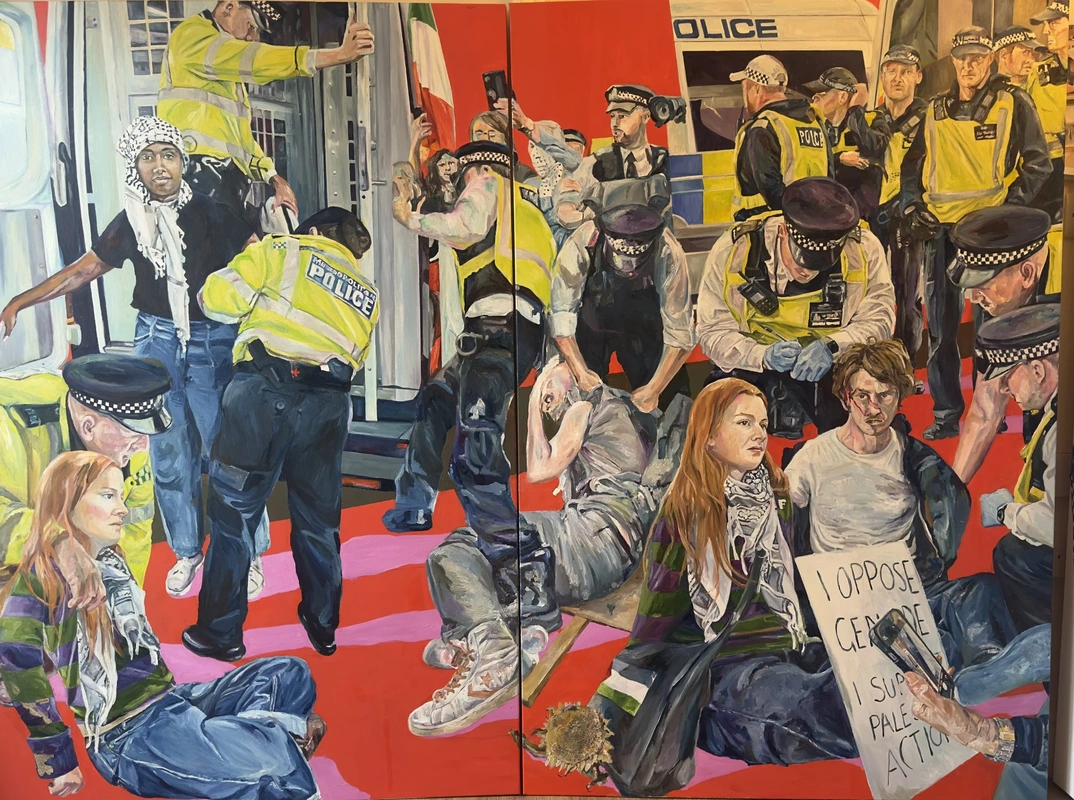
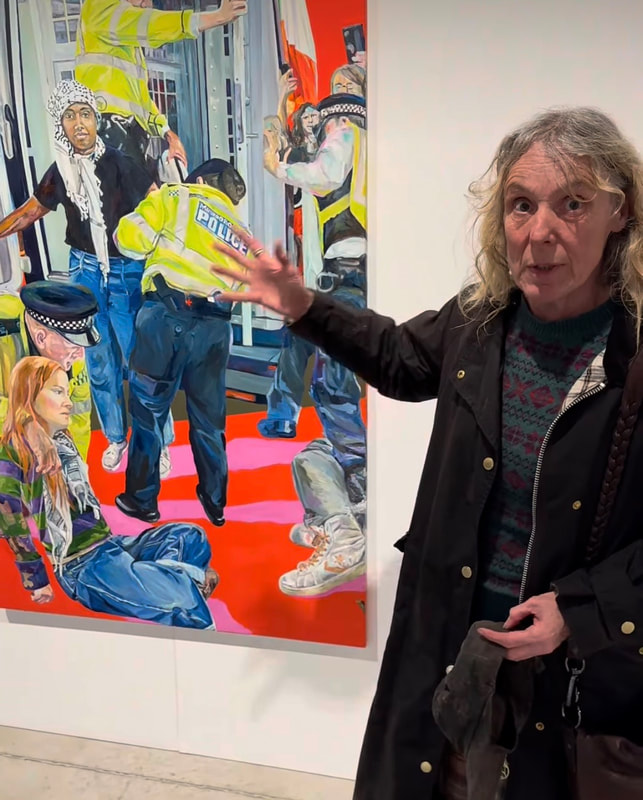
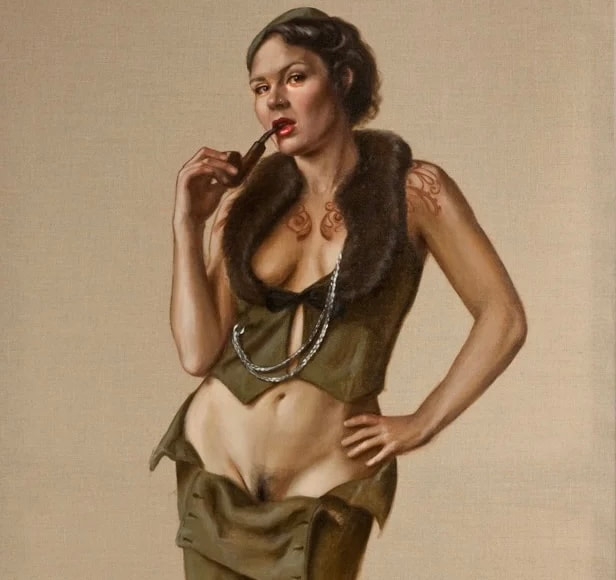
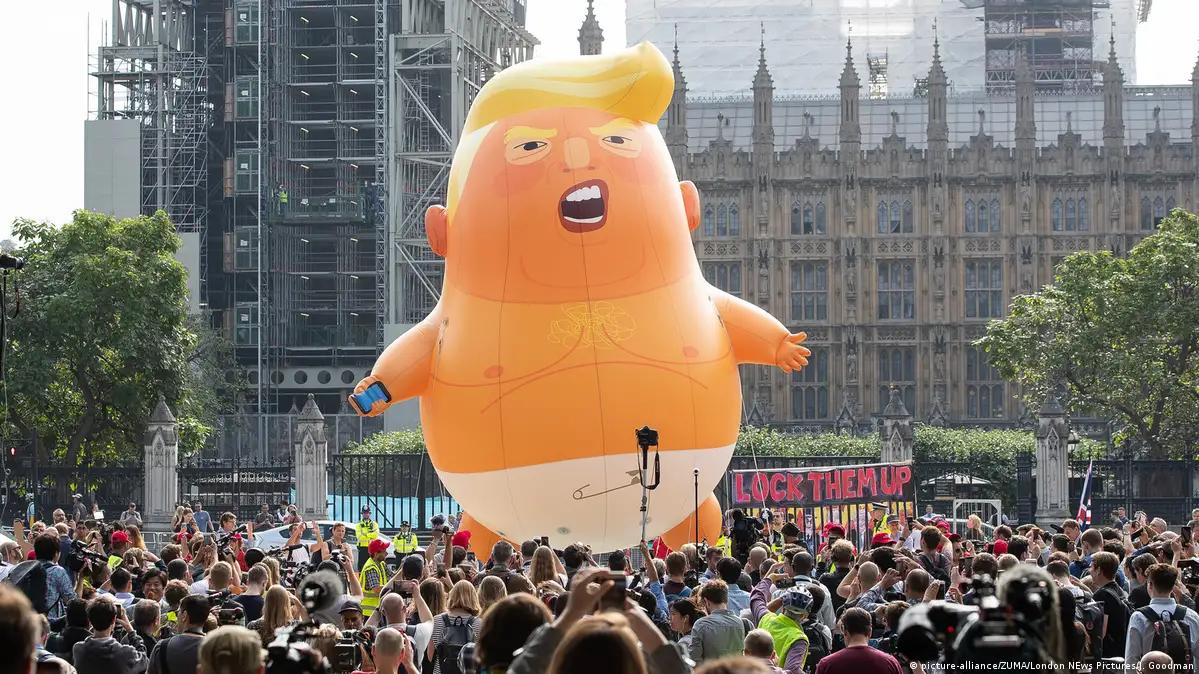
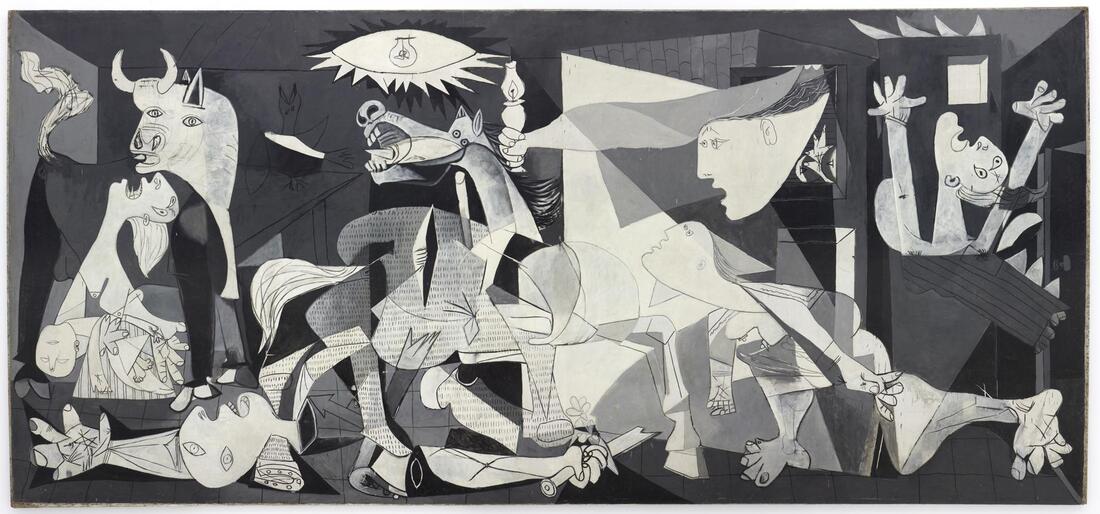
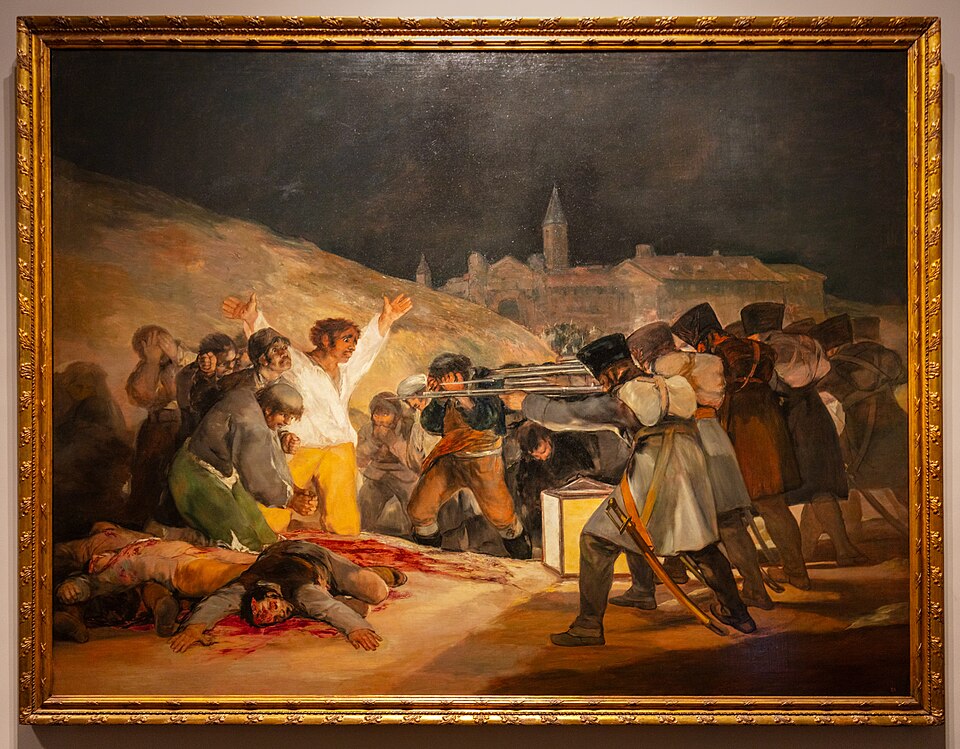
Where do we draw the line between artistic freedom and curatorial responsibility? Should galleries censor art? And if so, who decides what is acceptable and what isn't? It's a question I've been considering following a recent controversy involving fellow artist Christine Roychowdhury and her painting Protest. Christine's work is a diptych depicting contemporary political protest. It was exhibited in its entirety at the Society of Women Artists' (SWA) annual exhibition at Mall Galleries in June this year. Subsequently shortlisted for the Women in Art Prize, the painting was to be displayed at a gallery in Chelmsford. However, when the exhibition opened, only one panel was hung. The missing panel depicted a protester holding a placard that could be interpreted as supporting Palestine Action, an organisation proscribed under UK terrorism legislation. According to Christine, the gallery were concerned that the image might cause offence! The decision prompted protests from fellow artists. One suggested leaving the empty space where the missing panel should've been, turning the art of censorship into part of the exhibition itself, which is effectively what happened - for a few days, at least. I've always believed artists are chroniclers of their time. Think of Picasso's Guernica, Goya's The Third of May 1808, or Kathe Kollwitz's depictions of poverty, grief, and war. These artists weren't simply creating attractive images, they were responding to the world around them. This brings me to what I find so troubling about the decision to withhold part of Christine's painting. Surely depicting something is not the same as endorsing it... or is it? A photographer documenting a demonstration might capture protesters carrying controversial placards. A journalist might report on the same event. Why would a painter depicting that scene be treated differently? Of course, artists aren't necessarily impartial observers, and neither are photographers who choose what to include in the frame and what to leave out. We all interpret what we see. However, if certain events become too politically sensitive to depict, aren't we in danger of sanitising our history? Remember the enormous inflatable depicting President Donald Trump as a baby wearing a nappy, flown above protestors during his visit to London in 2018? Some saw it as legitimate political satire; others considered it deeply disrespectful, yet the inflatable was subsequently acquired by the Museum of London as an object of historical significance. Something that offended people at the time is now preserved as part of the history of political protest. I find that rather telling. Would we defend an artist's right to ridicule a political figure we admired? Perhaps that's where our commitment to artistic freedom is really tested. Of course, galleries have responsibilities. They must consider public safety, their visitors, and the law, but exhibiting a work doesn't necessarily mean endorsing its message. Surely there is a distinction between choosing not to exhibit a work and agreeing to display it, then withholding part of it. A diptych is conceived as a single artwork. Removing one panel can fundamentally alter its meaning. But there must be limits. What about art that actively incites violence, promotes hatred, recruits for violent extremists, or involves exploitation and abuse? Artistic freedom cannot be a blanket justification for genuine harm. Context is everything. A painting depicting a racist demonstration might be exposing prejudice rather than promoting it. Disturbing images of genocide might condemn atrocities rather than glorify them. What happens when the artist's intentions and the audience's interpretation differ? Who decides? There is a difference between something being offensive, genuinely harmful, and unlawful. We shouldn't confuse the three. The proscription of Palestine Action raises legitimate legal considerations, but depicting a controversial placard is not automatically equivalent to endorsing its message. I ask these questions as someone who has been on the other side of a curatorial decision. When Protest was exhibited at the SWA annual exhibition at Mall Galleries in June, it hung in the East Gallery, which I personally curated. In fact, we made Christine's painting the focal point of that particular wall, arranging the surrounding exhibits around it, not necessarily because of its political message but because it was big, bold, and full of action. It had a presence that naturally commanded attention. We were, of course, conscious that its subject matter might provoke a reaction. There was even some concern that someone might attempt to deface it. Nevertheless, we displayed both panels. The SWA has itself experienced censorship by a gallery when in 2014 we were asked by Mall Galleries to take down Portrait of Ms Ruby May, standing by the artist Leena McCall. This was despite the society itself selecting the piece for exhibition. Different subject matter but the same fundamental question: who ultimately decides what the public is allowed to see? There is a wonderful irony in all of this. Christine painted a work about protest, only for the decision to withhold one of its panels to provoke a protest of its own. The protest became the protest! Eventually the missing panel was hung, and the controversy generated considerable publicity for the painting, something the gallery itself acknowledged. What fascinates me is how the painting's subject matter spilled beyond the canvas into real life. The debate surrounding its display became part of its story. There is something rather poetic about that. So where do we draw the line? I don't believe every artwork must be exhibited, nor that artists should be immune from criticism. Curators have legitimate responsibilities, and there are legal and ethical boundaries. Art isn't always about producing something beautiful to hang above the sofa. Sometimes it confronts us with uncomfortable truths, challenges our beliefs, or simply makes us angry. That's fine. What does concern me is the possibility that, in trying to avoid offence, we begin deciding which aspects of contemporary life artists are permitted to record. Perhaps the question galleries should ask isn't simply whether the work might offend, but whether there is a compelling reason it cannot be shown, and whether explanation or discussion might be preferable to removing it. In Christine's case, I feel it would have been better to let the public see the painting in its entirely and make up their own minds. Thankfully this is exactly what the gallery did in the end. If we defend artistic freedom only when we agree with the artist, are we defending artistic freedom at all? I'd be interested to know your thoughts. As always, please share your views in the comments box below.
8 Comments
I seem to have blinked and suddenly we are halfway through September!!
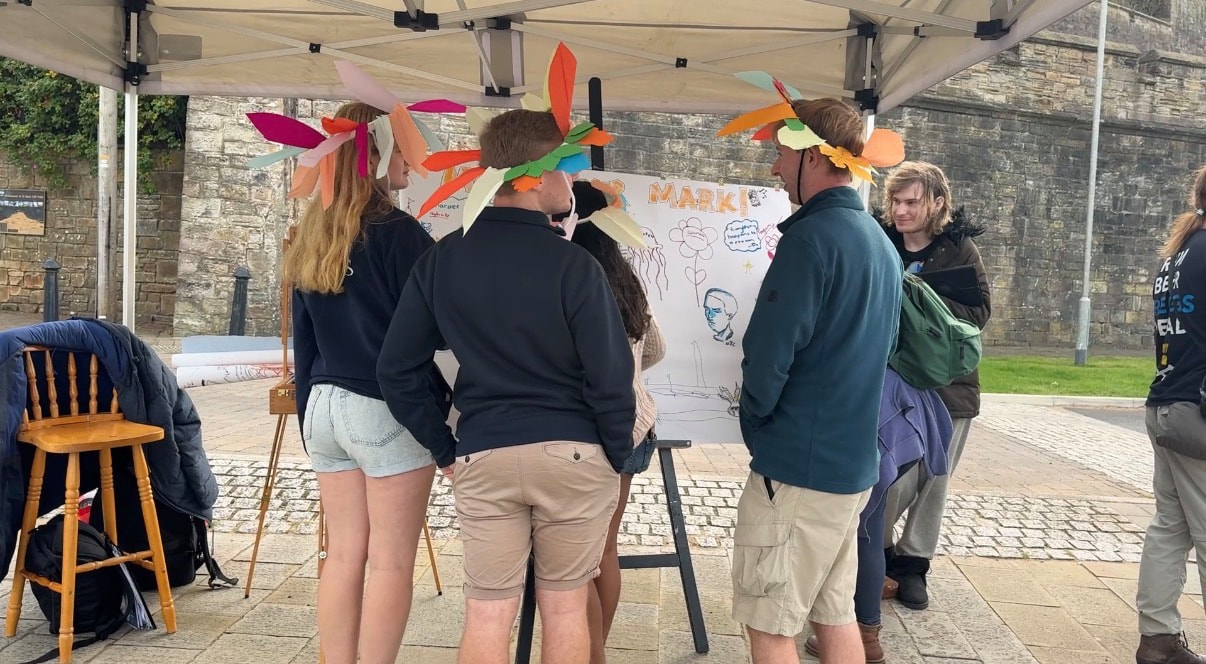
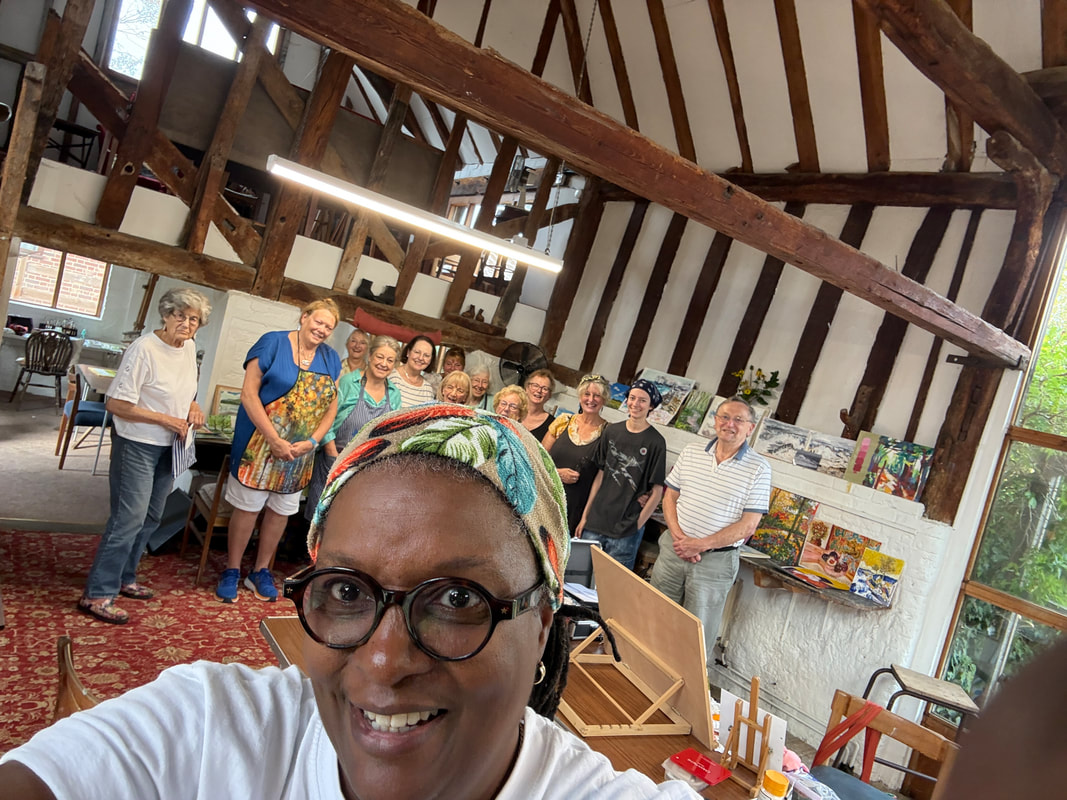
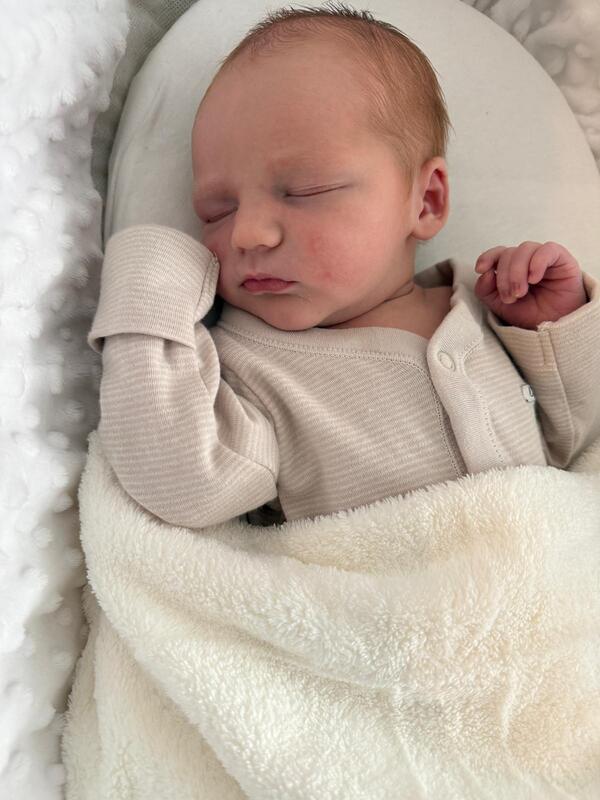
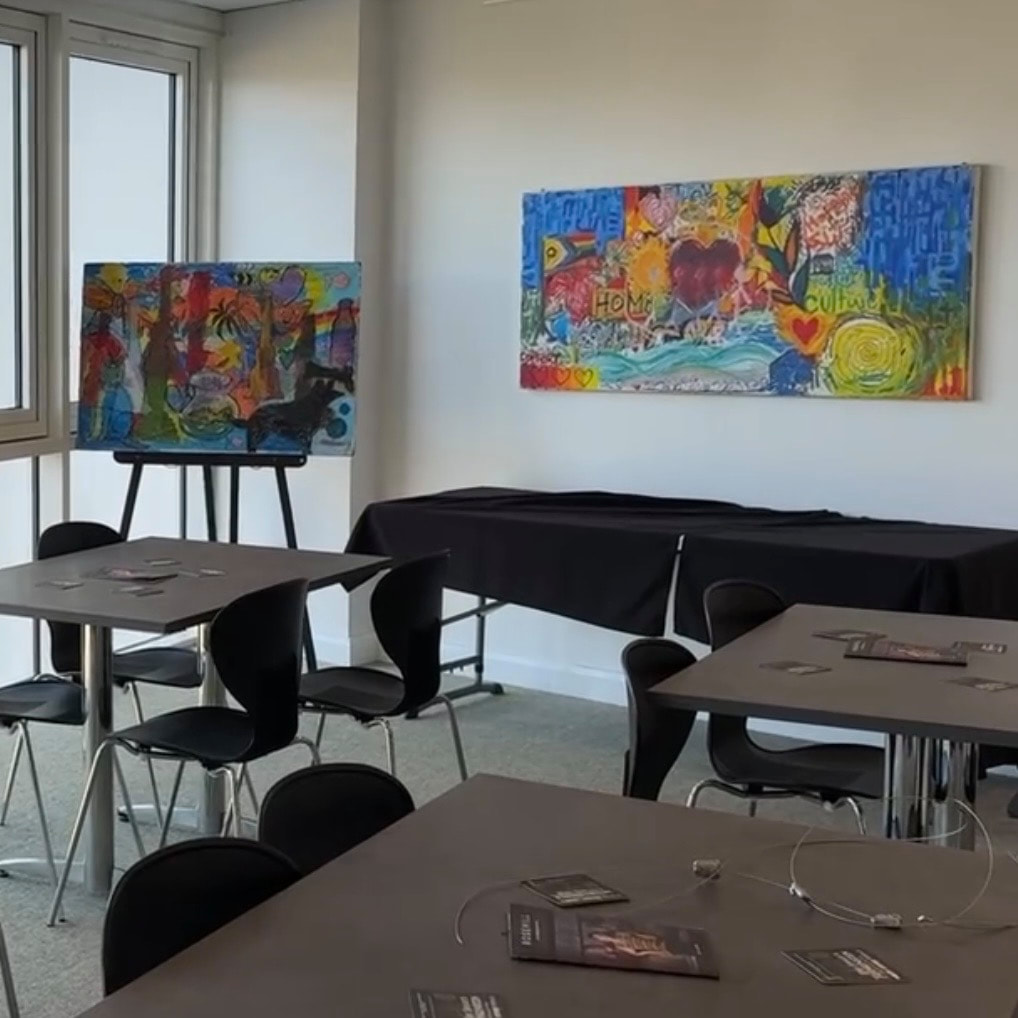
The last few weeks have been a bit of a whirlwind, with exhibitions, teaching, Open Studios, film, painting and all the usual bits and pieces that seem to find their way into an artist's life. And just when I thought I knew what September was going to look like, life had a couple of other ideas. At the end of July, I was delighted to be part of The People's Gallery at Rosehill Theatre, which continues until 25th September. I'm showing A Lot of Potential, and I always enjoy seeing work out of the studio, and in a completely different space. Paintings seem to take on a life of their own once hung on real walls outside of the studio. There was also Whitehaven Weekender at the end of August where I spent two days creating a large interactive community artwork. We invited people to get involved and make their own mark and it was great watching the bigger picture evolve as more and more people made their contributions. Then it was off to Dedham Hall in Suffolk for another 3 day residential painting course. I was covering for my friend Soraya again, and had a lovely group of thirteen artists to keep me on my toes. We began by talking about what we thought were the elements of a good painting. From there and without getting too technical, we explored composition, tonal values, simplifying shapes, colour and contrast, working in acrylics, and eventually mixed media. By the final day we were breaking a few rules, which is always one of my favourite things to encourage! I barely had time to unpack before Eden Valley Open Studios began. I spent several days at the studio, met some lovely visitors and even waved goodbye to one of my little plein air sketches of Dodd Wood. There is something particularly satisfying about selling one of those small paintings made outside, probably while battling wind, insects, and rapidly changing Cumbrian weather. Meanwhile my film Fragments Of Belonging has found another home! The film is showing at The Rum Story in Whitehaven as part of their reimagined exhibition. This feels particularly special. Fragments of Belonging grew from questions around identity, migration, memory, and belonging and having it shown in a place whose history is so intertwined with movement, trade, colonialism, and the connection between West Africa, the Caribbean, and Whitehaven feels very appropriate. And then there was another lovely bit of news for Fragments of Belonging. My short poetry film, The Ones Who Still Ask received it's first festival laurel. It's always slightly strange sending work out into the world and then getting on with everything else while you wait to see what happens to it. So seeing that laurel sitting alongside the film felt rather special. A small thing perhaps, but definitely one of those moments worth stopping to enjoy. And then there was the knee... After months of waiting, my knee replacement was finally booked for 11th September. I organised everything around it, finished teaching, planned Open Studios around it, prepared myself mentally and practically and then two days before the operation... it was cancelled! Oh well... I have a new date for 2nd October so we shall try that again! I've saved the best for last!! September had something rather special up it's sleeve. On 11 September, while I was not having my knee replaced, my first grandchild Harlow arrived!! So I have become a grandmother! I've already made the trip down to Wellingborough to meet him and needless to say - he is absolutely gorgeous! So yes it has been a busy few weeks! Now I'm back in the studio, looking at the paintings, the unfinished work, and all the ideas waiting for me. I've got a couple of weeks before the new knee date, and I'm hoping that somewhere amongst the admin, applications and everything else, I might actually manage to do the thing all of this revolves around... PAINT!! 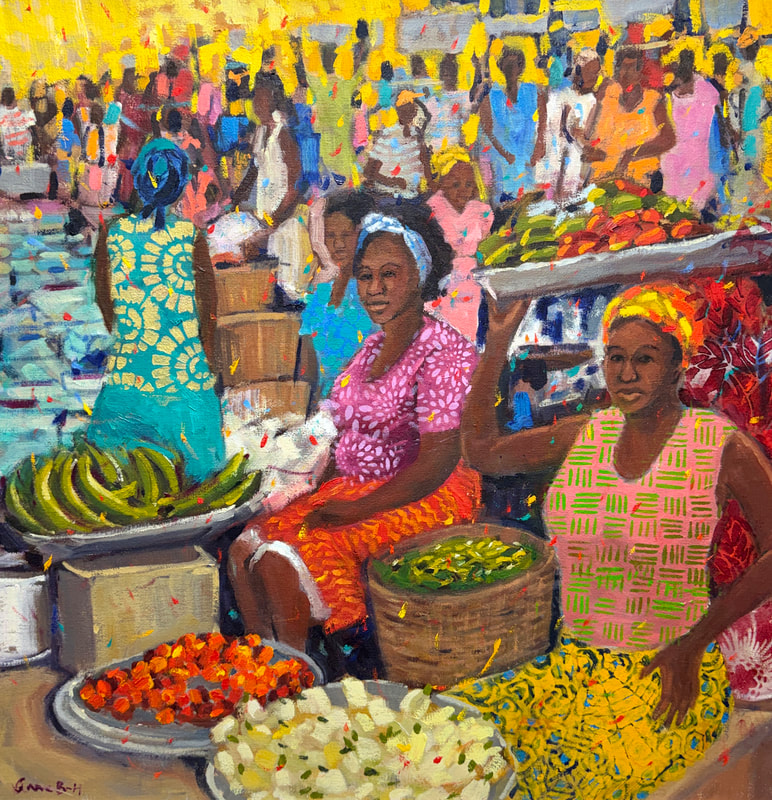 Do you ever look at one of your old paintings and wonder what would happen if you spent a bit more time with it?
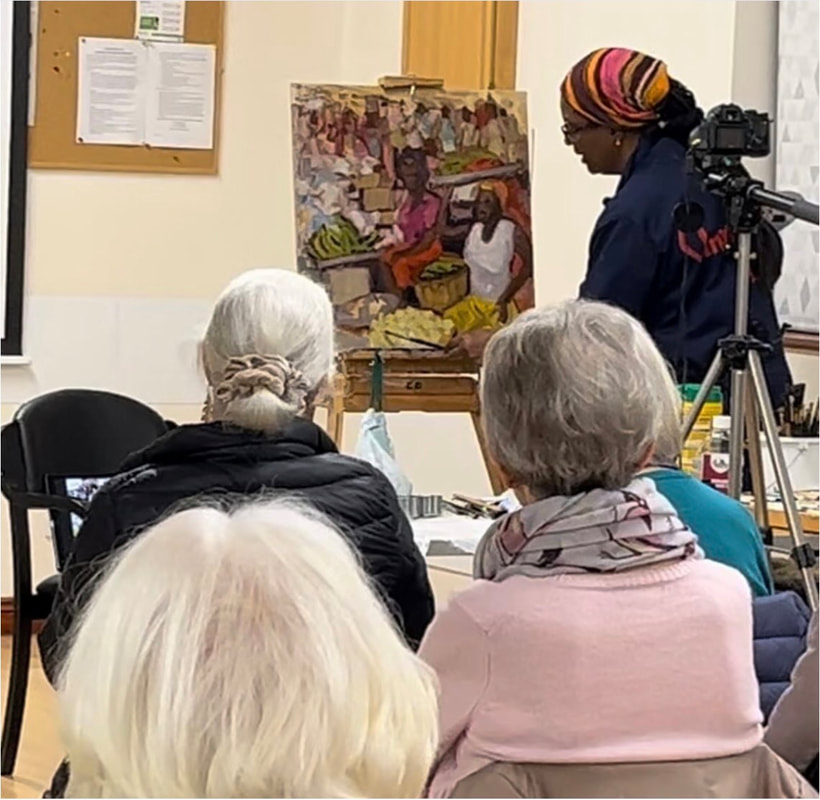
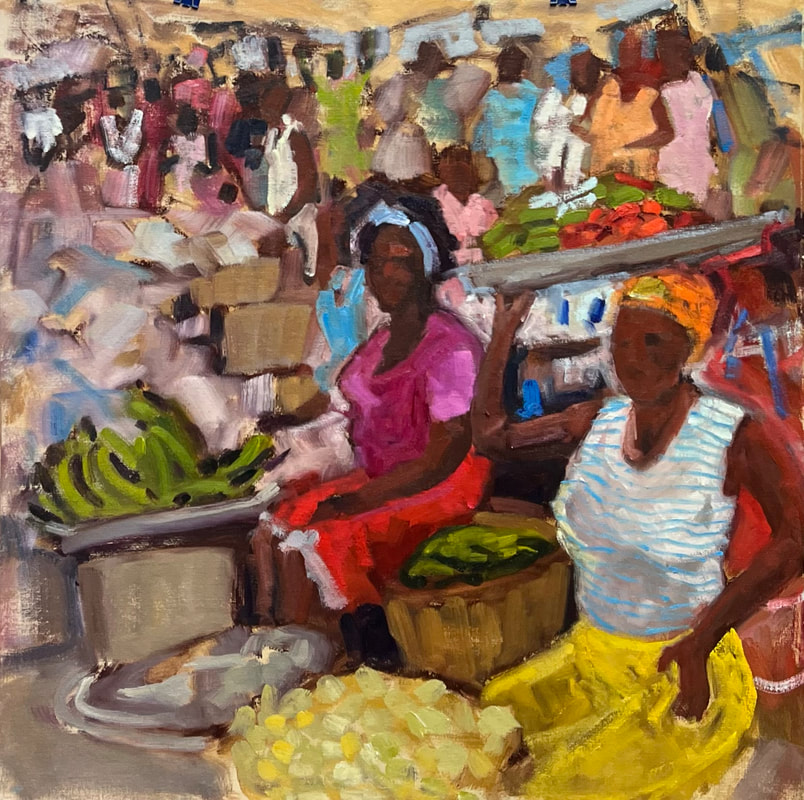
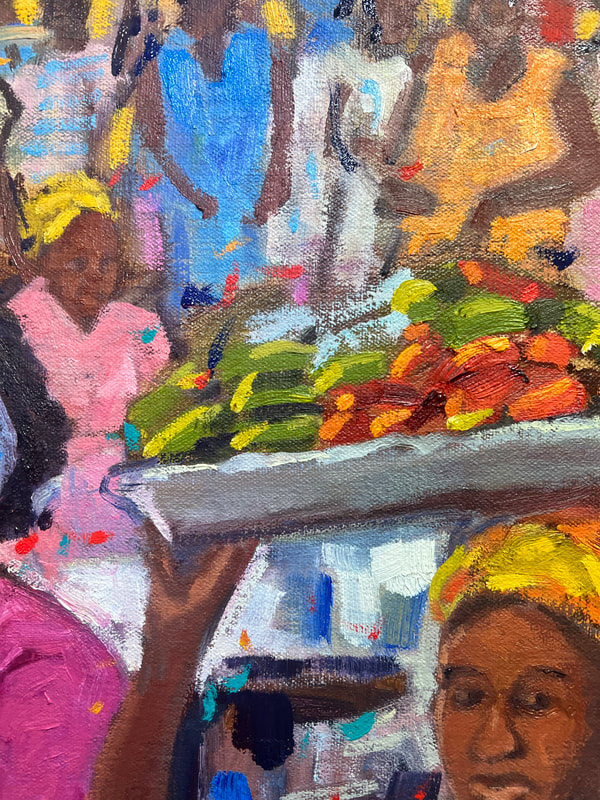
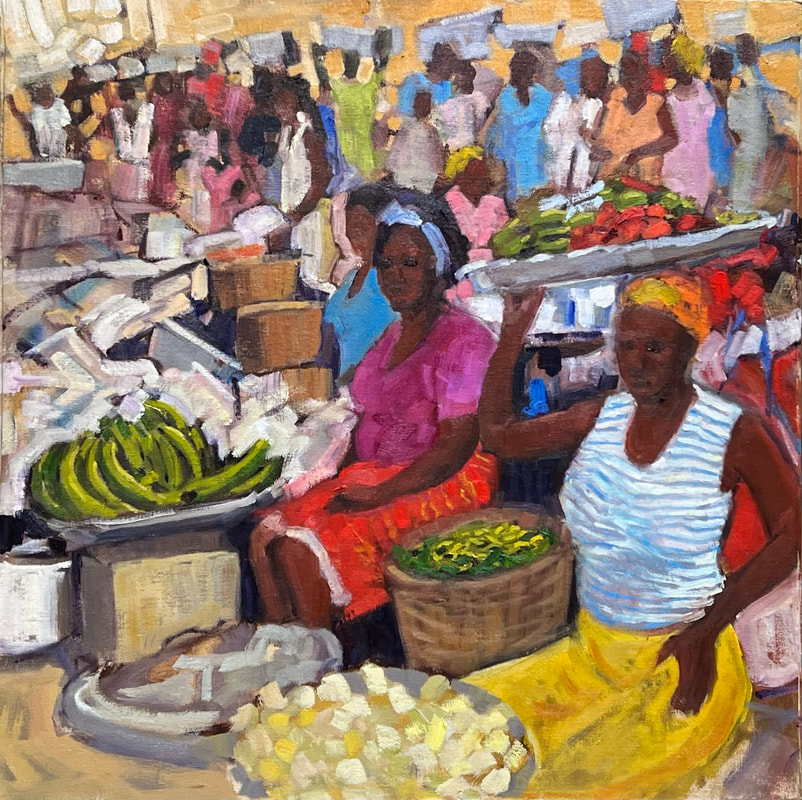
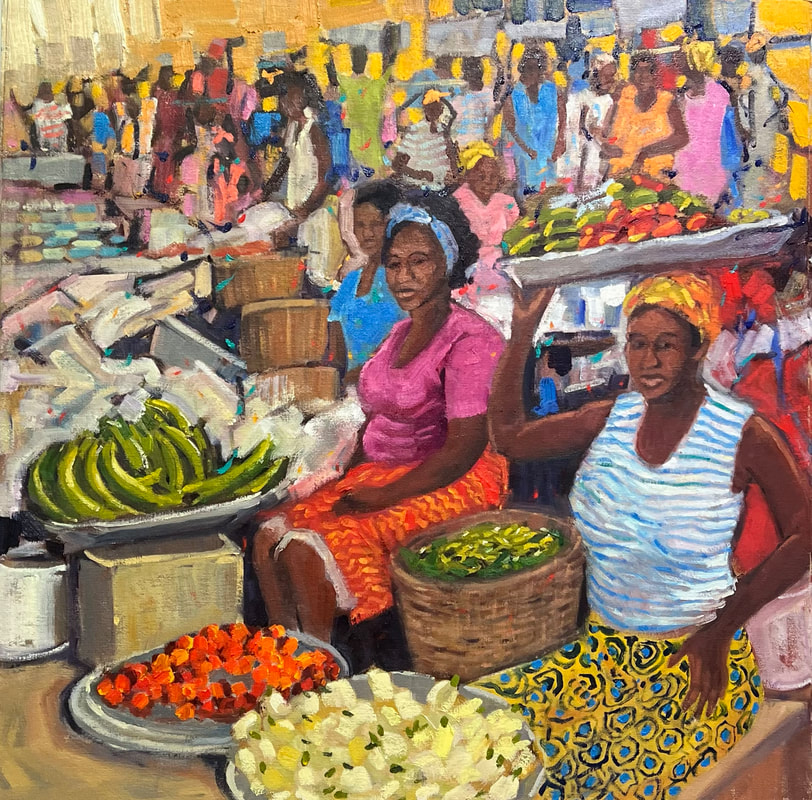
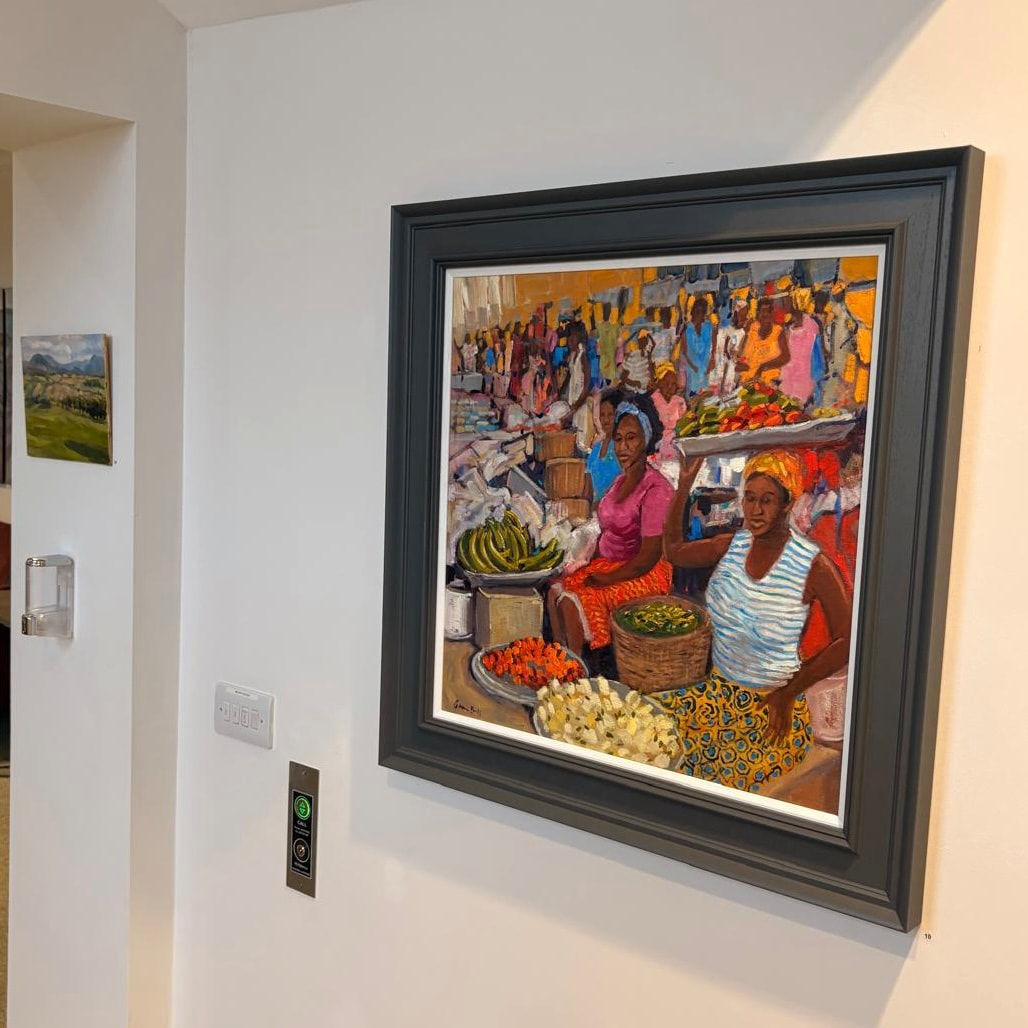
Two years ago I was invited to give a painting demonstration for Winslow Art Society. They wanted to see how I build up one of my colourful Ghanaian market scenes, so I painted this in the front of the members, talking them through my process. When I got home, it went into a corner of the studio. It wasn't unfinished. In fact it had done what it was supposed to do. It showed the stages of the painting and how I work out the composition. I often say composition is one of the main reasons a painting works. People are often drawn to a painting without always knowing why, and I think composition plays a huge part in that. Every now and again I'd glance at the painting and think, I wonder what would happen if I added a bit more to it? Not because there was anything wrong with it, it had been painted as a quick two-hour demo but I felt there was still a bit more I wanted the painting to say. So, a couple of weeks ago, I picked it up and put it back on the easel. I started adding more colour, played with the composition a bit more, added some patterns and a few more people. I wanted it to have more of the atmosphere and energy that I remember from the markets in Ghana. Those wonderful places where your eyes never quite know where to look, the heady scents, noises... so much.going on! Gradually I felt the painting was beginning to tell a fuller story and by the time I'd finished I realised it needed a new title... Sometimes It's Just A Riot Of Colour! Looking at it now, I am glad I decided to revisit it. I suppose that's one of the nice things about painting. Just because you have signed off a painting doesn't always mean it has to stay exactly as it is. Sometimes you look at it with fresh eyes, see a few new possibilities and decide to try them out. Sometimes it works! I'd love to know if you have ever gone back to something you finished months or even years ago and then discovered later that there was still a bit more you wanted to add. Drop me a comment in the box below please. Also is this a 2024 painting or a 2026 piece? What do you think? This essay was first published on my Substack in February 2026. As it continues to reflect conversations I am having with artists and visitors alike, I've reproduced it here on my website...
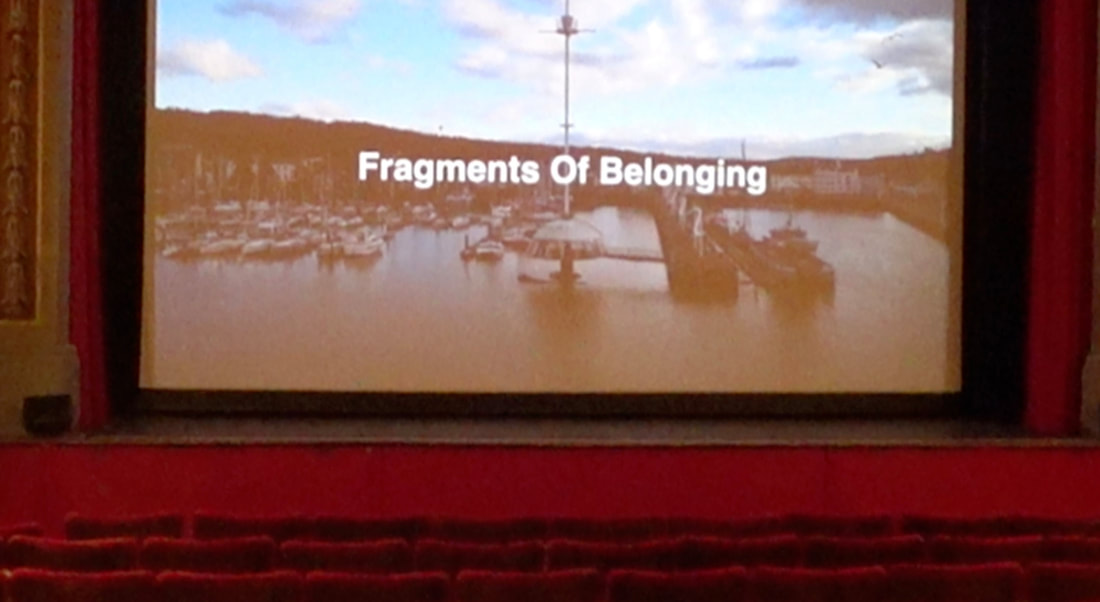
As Vice President of the Society of Women Artists, I have often reflected on a question that arises with increasing frequency. Do we still need a women only art society? Sometimes the question comes from outside the organisation. Often it comes from women themselves. I have spoken with women artists who hesitate to join because they feel it is no longer necessary to exclude men. Some worry it feels like a sisterhood in an ideological sense. Others just say, “I am not really into feminist groups.” For many, there is a genuine belief that we have moved beyond the need for separate spaces. These concerns deserve respect. Women today graduate from art schools in large numbers. Women exhibit widely. Women curate, teach, and lead institutions. On the surface, the doors appear open. It can therefore feel counterintuitive to step into a women only organisation. For some, it feels like choosing separation over integration. For others, it carries assumptions about ideology that they do not necessarily identify with. And yet, history matters. The Society of Women Artists was founded in 1855, at a time when women were excluded from many formal art institutions. They were denied access to life drawing classes. They struggled for visibility. Their work was often marginalised or dismissed. The Society, originally called the Society of Female Artists, was not created as a gesture of defiance. It was created because women needed a platform that did not otherwise exist. To dismiss that legacy too quickly risks forgetting how recent many freedoms are. The right for women to vote was secured through sustained effort within living memory. The idea of a glass ceiling emerged from lived professional experience. Progress has been real, but it has also been gradual and hard won. Respecting a women only art society is, in part, about respecting that inheritance.Nearly one hundred and seventy years later, the context has changed. Women are no longer formally barred from entering the art world. But the existence of access does not automatically erase structures shaped over centuries. The question, then, is not simply whether doors are open, but whether the wider cultural landscape has fully recalibrated in response to the long history that preceded this moment. When I use the word recalibration, I do not mean a dramatic correction or a rigid symmetry. The landscape has evolved significantly. Opportunities have expanded. Many women navigate the art world with confidence and agency. Recalibration, to me, is quieter than that. Institutions built over long periods of time do not shed their histories overnight. Cultural patterns shift gradually. Systems of recognition and value evolve over generations rather than in a single decisive moment. To honour a women only art society is to acknowledge that long arc. It is to recognise that the space created in 1855 was intentional, not incidental, and that intentionality still carries meaning. The Society’s Annual Open Exhibition, as its name suggests, invites submissions from both members and non members. Openness in that context means precisely that. The distinction lies in membership. Membership of the Society of Women Artists is reserved for women. That limitation can raise thoughtful questions, and it is right that it does. Membership and exhibition, however, are not the same. One speaks to the identity and governance of the organisation. The other speaks to the public platform it offers. Perhaps the day will come when a women only art society feels entirely unnecessary. That would not diminish its legacy. It would signal that the conditions which gave rise to it have been fully absorbed into the broader fabric of the art world. Until then, its existence is not about exclusion for its own sake. It is about stewardship, continuity, and respect for a history that shaped the opportunities many of us now benefit from. As both a practising artist and an officer of the Society, I do not see our role as exclusionary. I see it as custodial. We are simply holding open a space that others worked very hard to create. ______ What do you think? I'd like to hear your thoughts. Do you think organisations like the Society of Women Artists still have an important role to play, or has their purpose changed? Or indeed do they no longer have a purpose? Do share your thoughts in the comments below. A few weeks have passed since the screening of Fragments of Belonging at Rosehill Theatre in Whitehaven and I'm only just beginning to properly process what happened. What began as an exploration of Whitehaven, belonging, memory, migration, and identity gradually evolved into something much larger than I anticipated. Over the course of the exhibition and screening, it really warmed my heart to see so many people engaging with the work on display and with the questions afterwards.The evening of the screening still feels pretty surreal. The truth is at one point I really began to wonder whether I had bitten off a lot more than I could chew so my initial emotion was one of relief, and then seeing the film projected large in a theatre, hearing the sound out of loud speakers, and then hearing the audience respond afterwards with such warmth was truly touching. Now that the film is finished, I can say I've enjoyed watching the story unfold. It wasn't an easy process especially with such a steep learning curve for programs and applications I've not been too familiar with. The poetic and visual language of the work remains very important to me. As much as I have enjoyed this new-found passion for filmmaking, painting remains deeply important to me and always will and I would not want one practice to dominate the other. At their best, I want them to work together and inform each other. What excites me most at the moment is finding meaningful ways for those two worlds to interact with each other. With the first phase of Fragments of Belonging now complete, I've begun thinking more seriously about where the work might lead next. Over the past few weeks, I've been developing ideas for a second phase of the project which would expand the work beyond Whitehaven and Ghana to include Antigua as a third point of connection. The historical links between these places are complex and significant, but what interests me just as much are the human stories that exist within them. I find myself thinking a great deal about resilience, survival, and the fact that entire generations of people exist in places like Antigua today because their ancestors endured and survived unimaginable journeys and circumstances. I am currently developing an application to Arts Council England to support the research and development phase of the next stage of the project. I'm looking forward to sharing progress as we move along the spectrum but it will follow similar lines as the previous project with further filming, poetry, painting and archival research in Whitehaven and Antigua. In the meantime, I've started submitting Fragments of Belonging to a number of film festivals in the hope of allowing the work to reach wider audiences and continue the conversation that began here in Whitehaven. So here's a question - your answer will really help my research... Do you know where your ancestors came from, and has that shaped your sense of identity and belonging in any way? Please answer in the comments below and remember, your comments help other people to find the blog, your help is much appreciated. The Screening and Exhibition Last Tuesday (31st March), I watched Fragments of Belonging on a big screen for the first time, alongside a room full of supporters. The response to the Eventbrite invite had been strong, with over 70 people signing up.
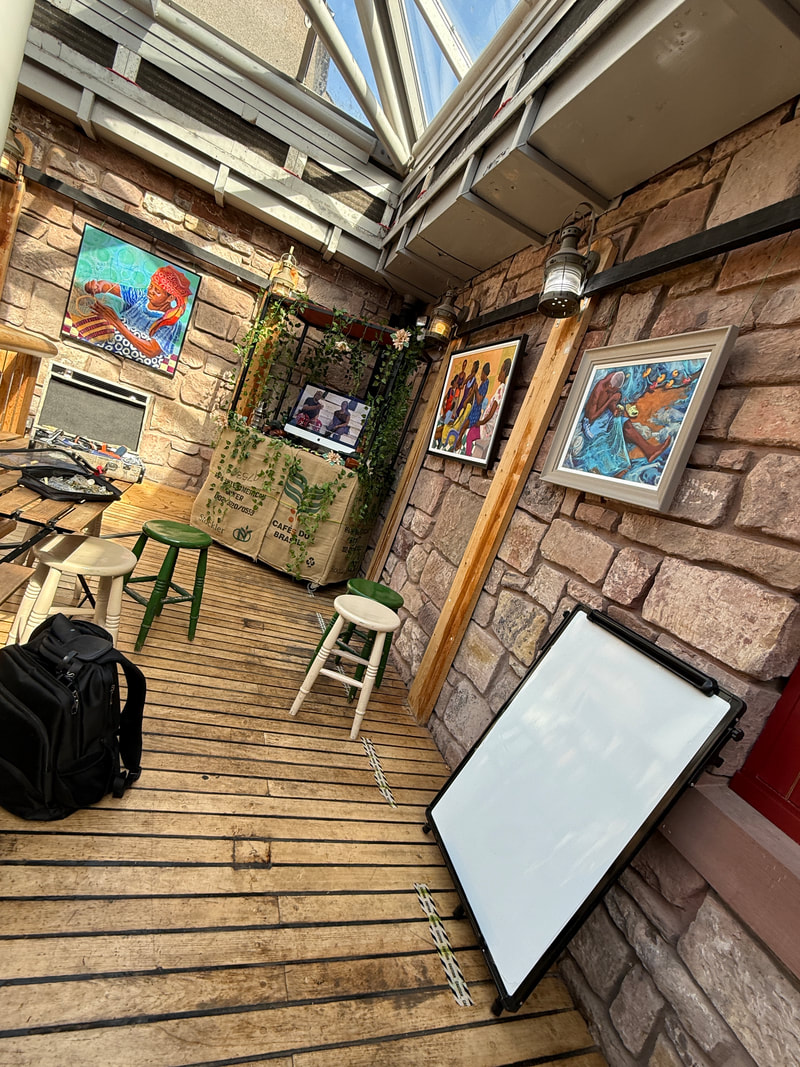
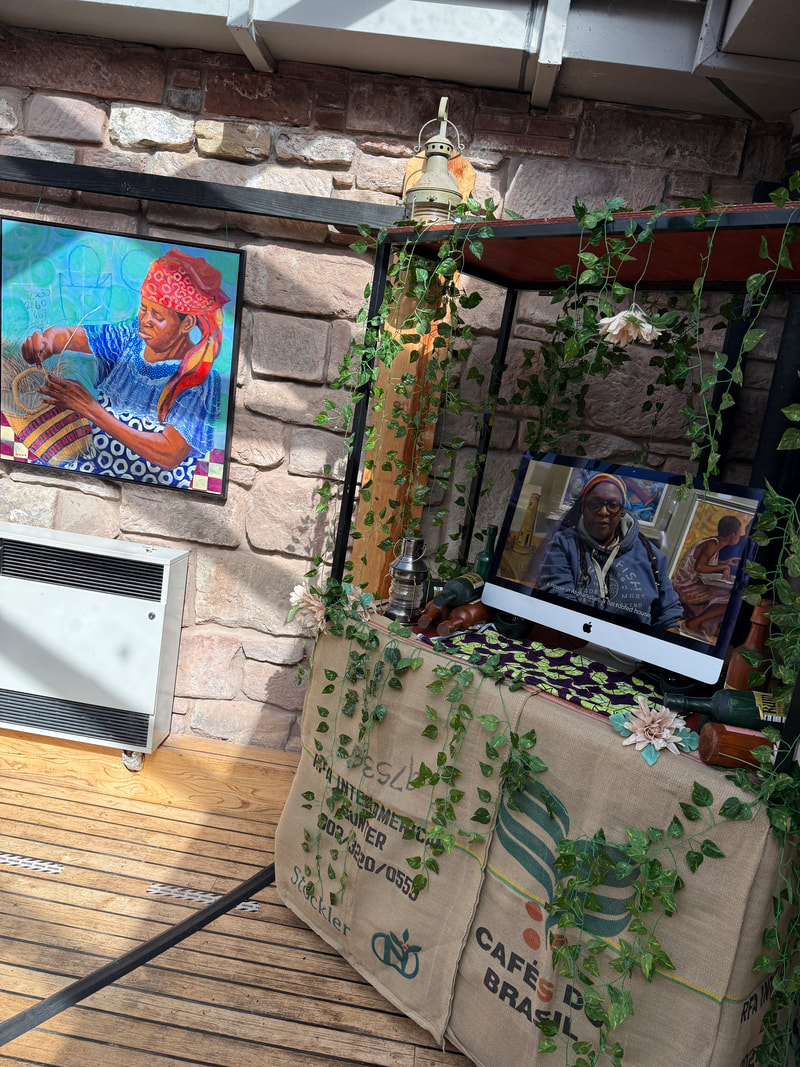
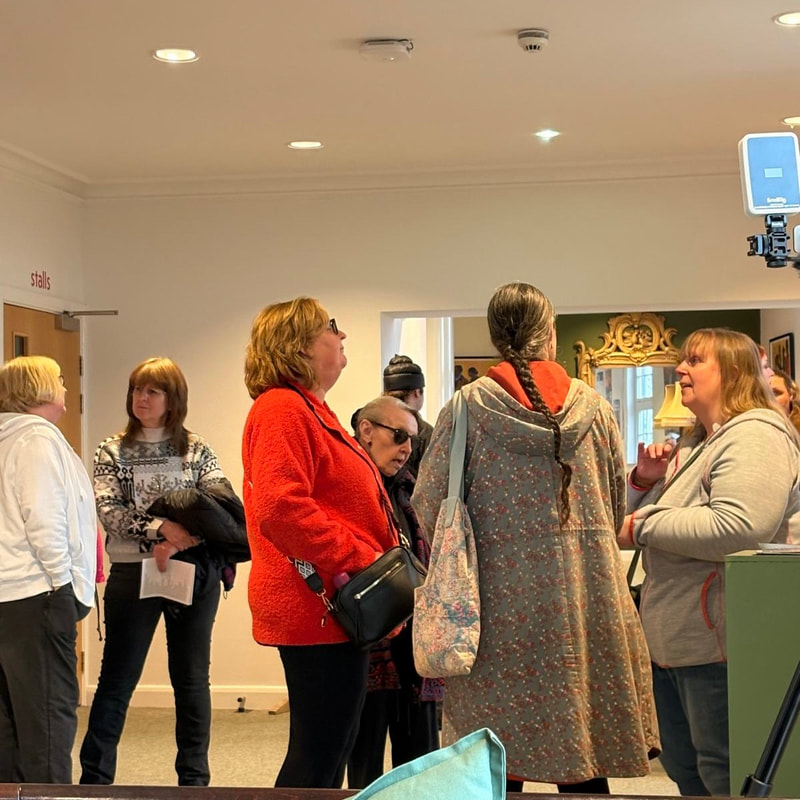
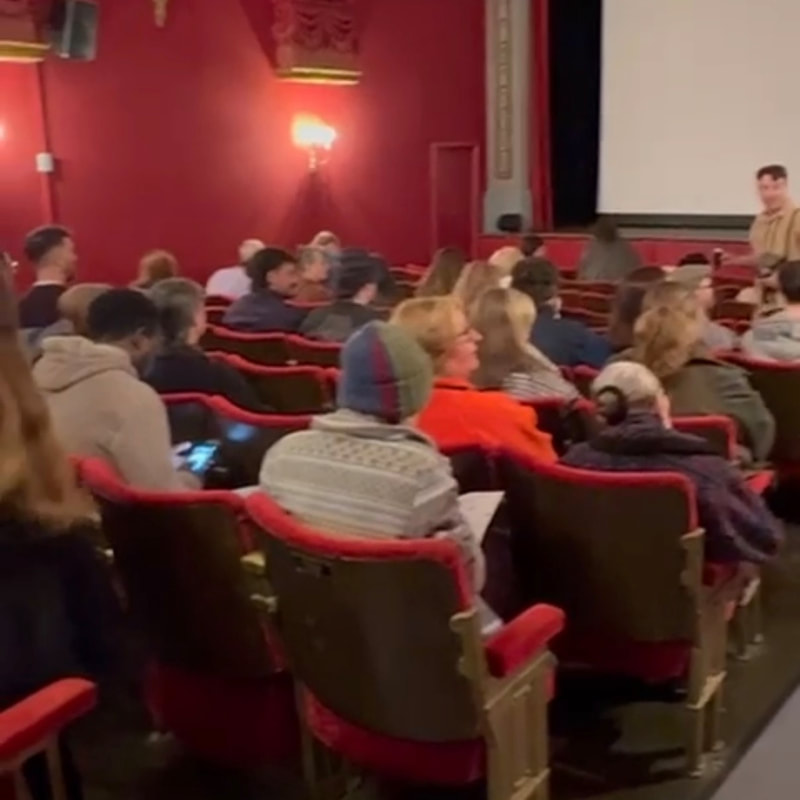
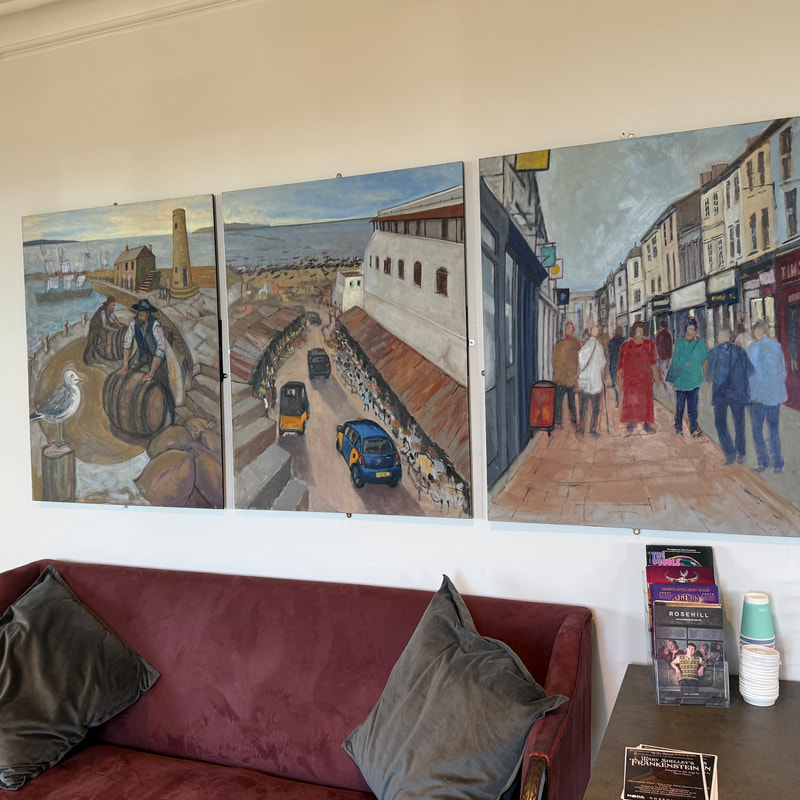
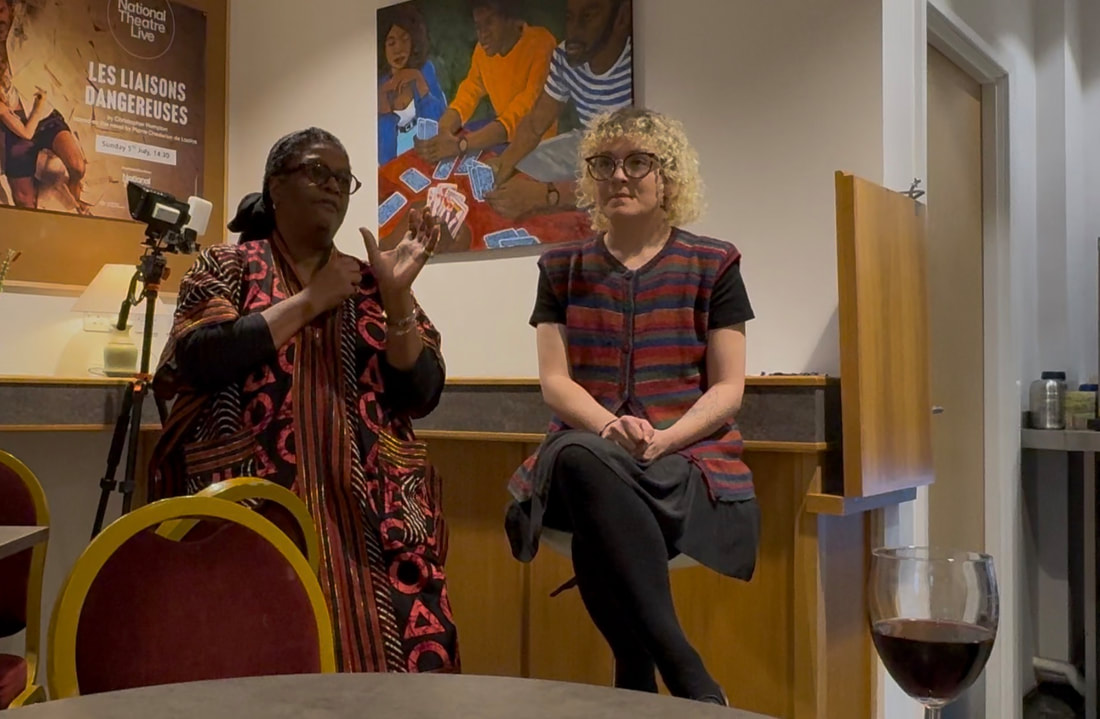
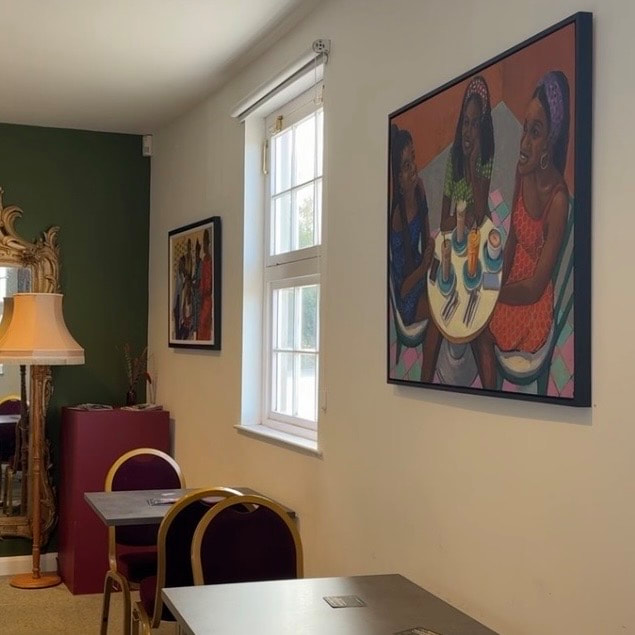
The screening sat within the exhibition, which comprised the triptych created as part of the project, a selection of my own paintings and sketches, and a selection of community created artwork. It felt important to have all of these elements together, each one holding a different part of the project. I don’t think anything quite prepares you for seeing your work like that. On a big screen, in a room full of people who have come to watch it. I felt it! The nerves, the excitement, and a sense of disbelief that this was actually happening. People came!! That meant a lot. Some I knew well, others not quite so well, and some I was meeting for the first time. They chose to be there, to give their time to the work. When the film started, the room became very still. I was aware of people watching, following it, and probably responding in their own way. Afterwards, people spoke about it as reflective and thought provoking. Some said it stayed with them, others said it touched them. For others, it raised questions. That mattered to me, because that is what the work is trying to do. The Q and A afterwards was just as important. We moved into the bar area and sat informally, no stage, no distance, just people gathered around. Hannah kicked things off, and then the questions came, one after the other. Some were direct, others more reflective, but all of them engaged with the work in a genuine way. Then there was the applause... first at the end of the film, and again after the Q and A. I wasn’t expecting that. It’s hard to explain what that feels like, but I have to tell you, it gave me goosebumps! I dedicated the film to my sister Liz, who was here when I started the project and shared my excitement with me, but wasn't able to see it completed. She had a journey of her own which began the day she left us on 20th August 2025. Fragments of Belonging was never meant to be a traditional documentary. It is closer to the way I write. I journal, I blog, I try to work things out through words. Fragments of Belonging is that, but in visual form. A visual essay, bringing together painting, poetry, film, and lived experience. Whitehaven was where it began. A place where I now live, but also a place with a complicated history. Being in the harbour, touching the stone, reimagining history, I was trying to understand what it all holds. Then the work opened out and Ghana became part of it. A return that was personal, shaped by loss, memory, and connection allowed the project to grow into something larger than I first imagined. There is more I’d like to do with it. I want to complete the triangle by visiting Antigua and learning from people who are here because their ancestors survived a perilous journey. The exhibition continues until 24th April, with the film playing on a loop in the gallery. For those who would like to spend time with it, headphones are available. This feels like an important part of where this work goes next. I’m grateful to Rosehill Theatre for their support in funding the project, to everyone who came to the screening, and to all those who have supported me in making this work possible. As always I'd appreciate any comments in the comments section below. It helps the blog reach more people and keeps the conversation going. Month 6 For months now, this project has lived in fragments. Filming in harbours and streets. Recording voiceovers in a quiet studio with the WiFi switched off. Learning how to edit in Premiere Pro, sometimes patiently and sometimes through gritted teeth. Discovering, almost unexpectedly, how moving image and spoken word can sit together and hold something that painting alone cannot. At times it has felt expansive and outward looking. At others, intensely personal. Now it is drawing together. In the studio, finishing touches are being added. Small adjustments to paintings, highlights, edges softened or strengthened, audio cleaned, transitions tightened. Alongside that, the practical things are happening too. Frames are being confirmed, submission images prepared, the hang considered, the unglamorous but necessary details that carry work from easel and edit timeline to exhibition wall and auditorium screen. The preview screening of the 30min film will take place on 31 March in the auditorium at Rosehill Theatre in Whitehaven. The exhibition itself opens on 24 March and runs until 24 April. Seeing those dates written down makes everything feel real. For so long, the work has existed in my head, on my hard drive, on the studio walls. Soon it will sit in a public space. That always brings a mixture of pride and vulnerability. This project has taught me more than I expected. Not only about belonging and migration, but about storytelling, about how poetry can carry historical weight without closing down questions, about how film can create tension and pause in ways that surprise even me. I did not set out thinking I would fall in love with filmmaking, yet here we are. The process has opened a new language in my practice, and I can already sense it will not be the last. The exhibition will centre the triptych, with the film shown alongside selected paintings that form part of my own portfolio of works. Together they explore belonging not as a fixed conclusion but as something layered and lived; geographic, historical, social, interior. And this is not the end. Antigua still sits in my heart. The third part of the journey is waiting. If this first chapter has been about Whitehaven and Cape Coast, the next will carry the story further across the Atlantic. The questions are not finished. They have simply taken shape. As March approaches, I find myself holding completion and expectation at the same time. There is satisfaction in bringing something complex to resolution. There is also curiosity about where it will lead next. If you are local to me in Whitehaven, Cumbria, and would like to attend the film preview on 31 March, tickets are available via Eventbrite: I would love to see you there as this work steps out of the studio and into conversation. The making of this chapter is nearly done. The journey itself continues. 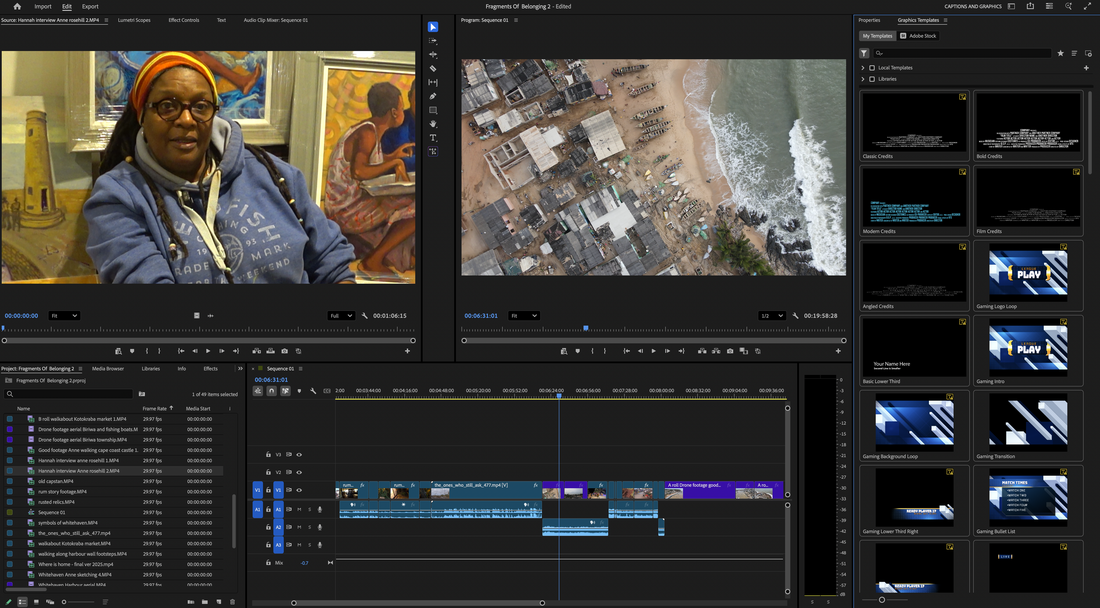 Month 5 Fragments of Belonging is a long term painting and film project exploring ideas of place, belonging, and migration through everyday life, memory, and inherited histories. The project brings together studio practice, research, and time spent responding to specific locations and environments, allowing the work to develop slowly and through sustained attention.
January has marked a noticeable shift in the project. Five months in, the work is moving from a more open, exploratory phase into one that feels increasingly focused. The earlier months were about gathering material and responding intuitively to history, memory, and environment as they surfaced. That period of openness was necessary, but it has gradually given way to a different kind of attention. As the project enters its final phase, I’m pleased to share that Fragments of Belonging will be presented as an exhibition this March at Rosehill Theatre in Whitehaven, opening on 24 March. This month has been spent largely in the studio, working intensively on the triptych that will sit at the centre of the exhibition. These three connected paintings are where many of the project’s threads are now being tested against one another. Ideas around everyday life, inherited histories, and movement through landscapes shaped by migration are no longer sitting alongside each other, but beginning to interlock. At this stage, the work is less about introducing new imagery and more about resolving relationships. Colour, tone, figures, and spatial structure are being adjusted and readjusted as the balance within each panel becomes clearer. It is a slower, more deliberate phase of making, one that requires patience and repeated looking rather than momentum. Decisions carry more weight now, because each change affects the whole. Migration has remained a central concern throughout the project, not as a single narrative but as an underlying condition. It appears through the movement of people, the traces of history embedded in environments, and the way belonging is shaped over time rather than assumed. These ideas are becoming more embedded in the work, less stated and more held within the structure of the paintings themselves. Alongside the painting, the film element of Fragments of Belonging is continuing to develop. This will take the form of a longer essay style film shown as part of the exhibition. January has been about clarifying its direction and overall structure, thinking carefully about pacing, voice, and how the film sits in dialogue with the paintings rather than simply explaining them. As the project moves closer to its conclusion, the emphasis is shifting. There is less focus on generating new material and more on refining what already exists, making decisions, and allowing the work to settle into a coherent whole. This stage feels quieter but more demanding, asking for concentration rather than expansion. Over the coming weeks I will be completing the triptych, continuing work on the film, and selecting a small group of supporting works for the exhibition. I will also begin sharing more about the exhibition itself as February unfolds. At this point, the work feels close, but not finished. The task now is to stay with it, to trust the process of drawing it all together, and to see it through. If you'd rather listen to me read the blog, press play below... Month 4 - The Inspiration Behind The Poem I’ve recently returned from a trip to Ghana where the question of home came up again in a quiet but powerful way. I travelled from Accra to Cape Coast and stopped briefly at Biriwa, my ancestral village. Even though I was not born there and have never lived there, I feel I can call it home because I know it to be the home of my ancestors, a place carried through family stories and memory, passed down long before I ever stood there.
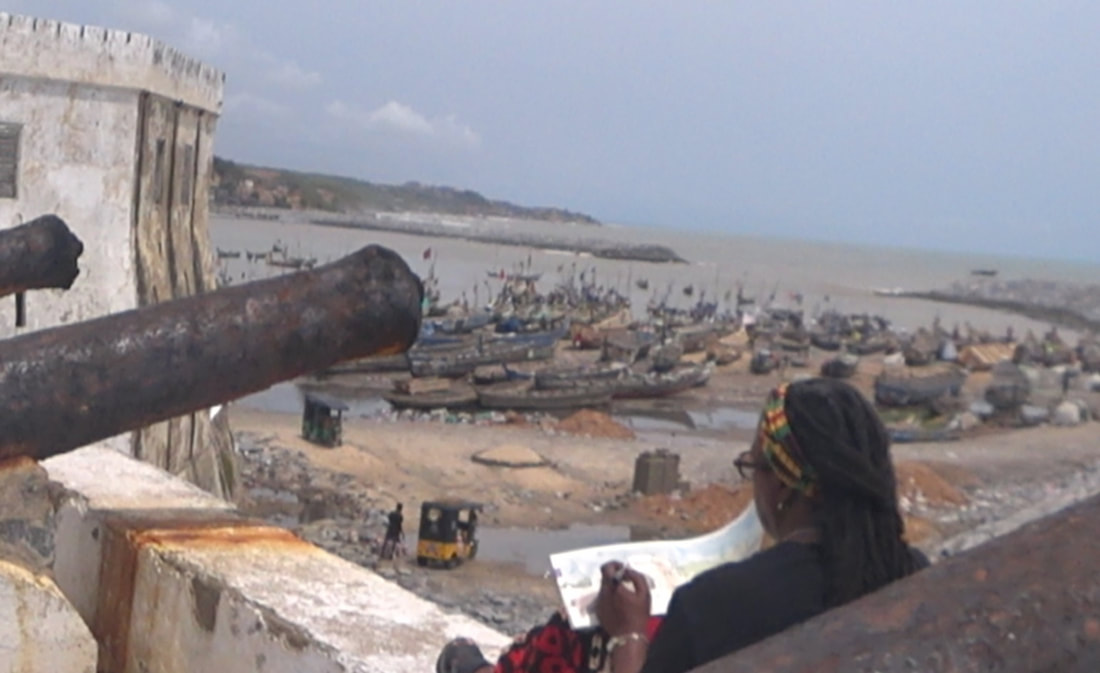
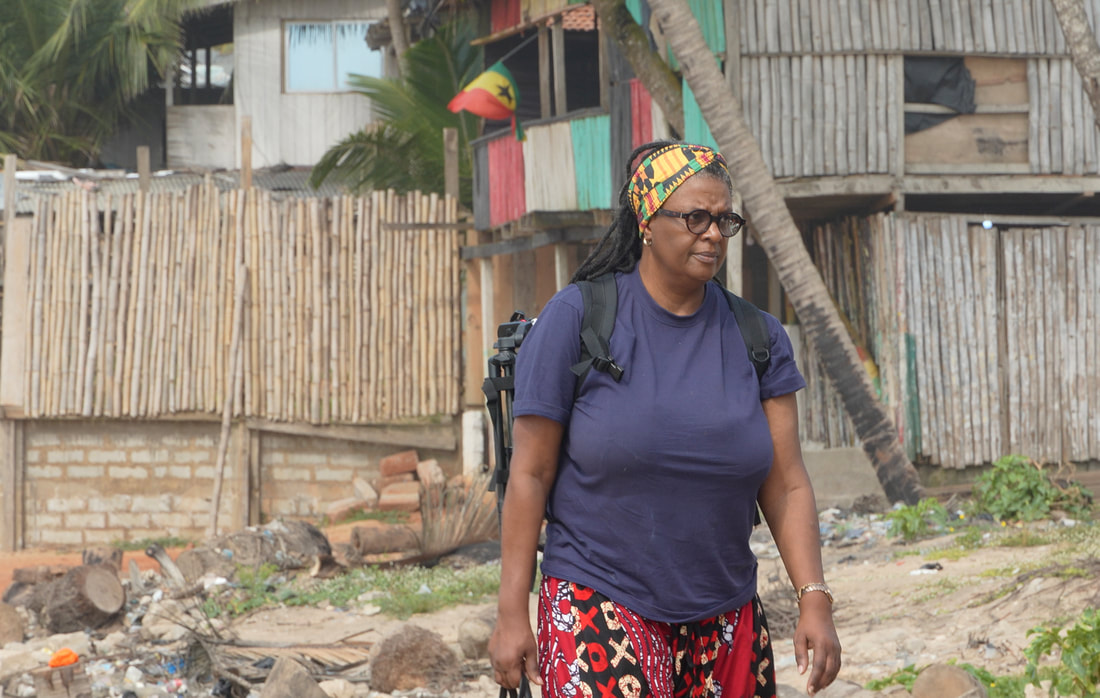
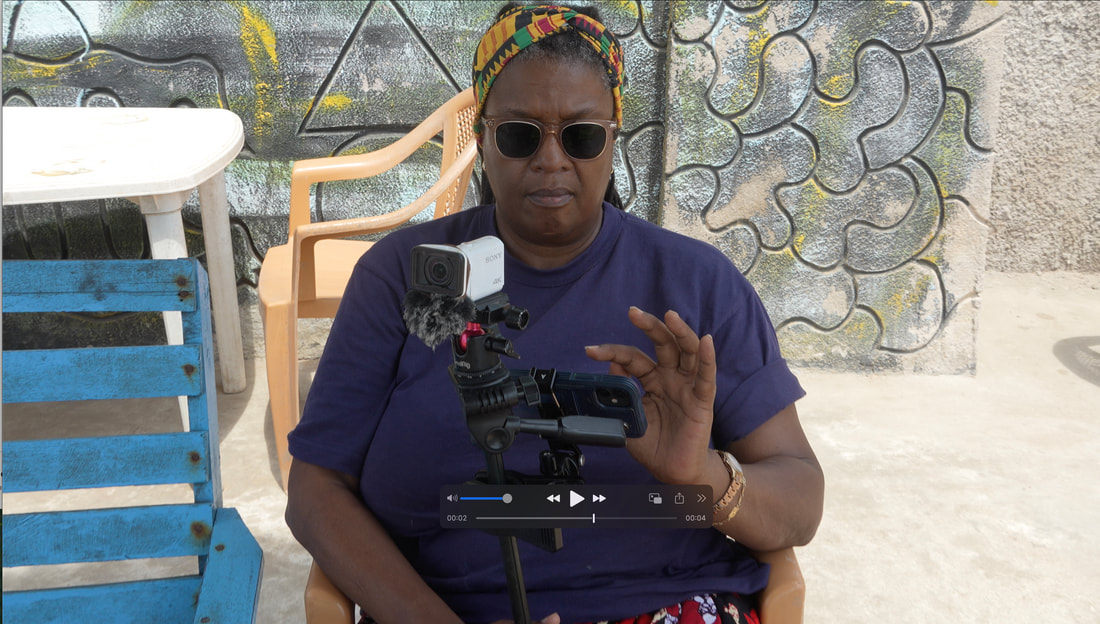
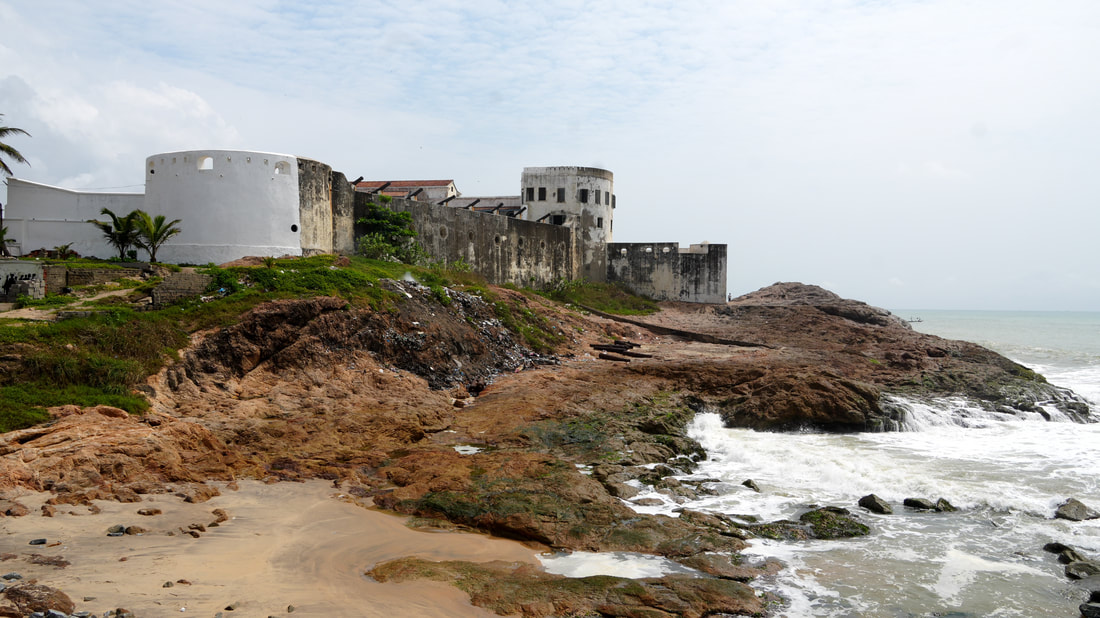
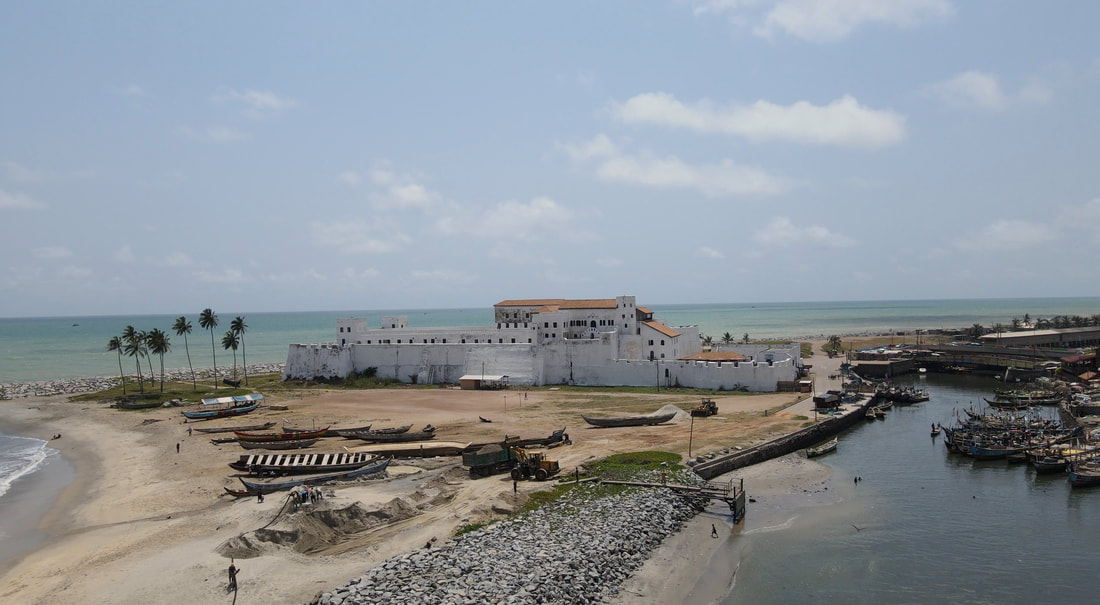
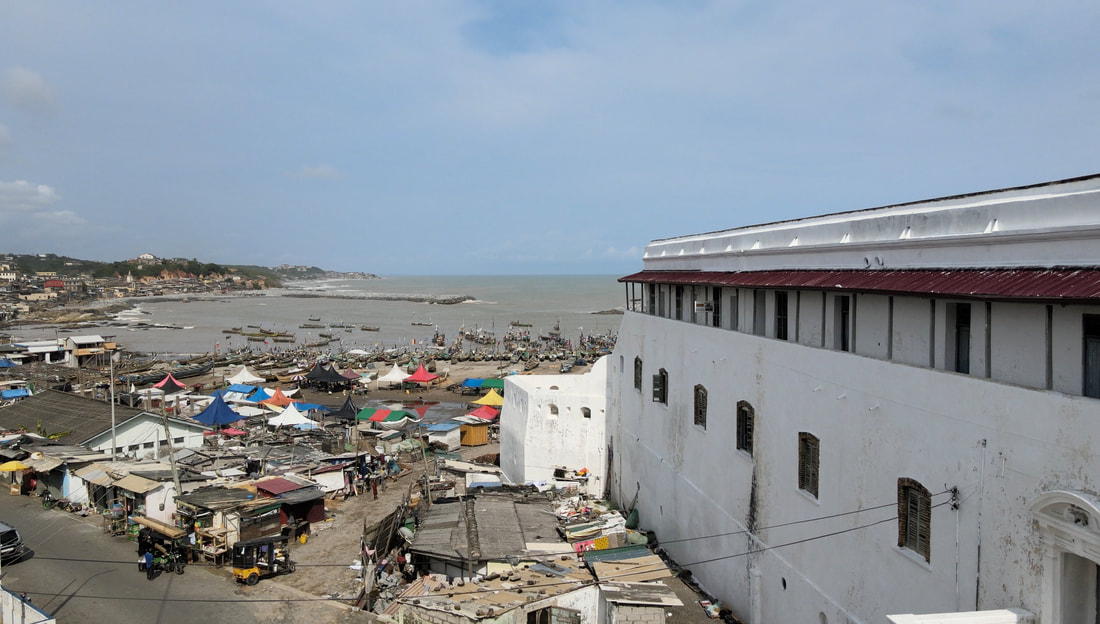
The warmth of that brief stop at Biriwa stayed with me throughout the journey. Standing on land my ancestors once walked stirred a sense of familiarity that is difficult to explain. It reminded me how places can hold us, even from a distance, and how belonging sometimes comes from knowing where your story began rather than where your life has been lived. While I was in Ghana, I found myself thinking again about a young Afghan man I met in Whitehaven during Refugee Week in June 2024. His words have stayed with me ever since and were the spark for the poem Where Is Home? He spoke so tenderly about the home he had been forced to leave behind. He described families living closely together and spending warm evenings on the flat roof of their house, eating, chatting and simply being with one another. He told me how his mother was always the first person you saw when you entered the home, a detail that seemed to hold everything together. And he spoke about the children playing between the quince and apple trees, as if the trees themselves were part of their daily rhythm. Listening to him paint such a gentle and idyllic picture of belonging made me wonder what must happen to push someone away from a life like that. What compels a person to leave a place they love so deeply and travel to a country where they might not be welcomed, where they must learn a new language and often take work far below their qualifications simply to survive. It reminded me that migration is not always a choice. Some people move in hope, some in fear, and some because they are forced. In the history of places like Cape Coast and Elmina, many were taken from the land of their ancestors and enslaved, carried across seas to live far from everything they knew. That reality, woven into the stones and shoreline of those coastal landscapes, sits heavily beneath the question of home. Walking through Biriwa and Cape Coast brought those thoughts back into focus. I carried the Afghan young man’s memory alongside my own experience of reconnecting with ancestral ground. His story of home lived beside the landscapes I was seeing, and I realised that both held something essential about belonging. One was a memory of a place lost, full of love and longing. The other was a place my family came from, a place I recognised instinctively even though I had not lived there myself. Between these two was Whitehaven, the town I chose, the place where this project began, and where I now live and create. It made me think about how home is rarely a single place. It might be the land you inherit, the land you leave, the land you return to or the land where you build a new version of your life. Sometimes it shifts. Sometimes it lives inside you rather than around you. Fragments of Belonging is, at its heart, a project about migration and the many reasons people move from one place to another. In exploring that question, I also find myself asking what home is or was, and what it truly means to belong. Some people move voluntarily. Others are forced by war or famine. And many, including those whose stories shape the history of Cape Coast and Elmina, were forced by slavery to leave the land of their ancestors and rebuild their lives in places they never chose. My upcoming trip to Antigua will help me understand more deeply the lives of those who were taken across the Atlantic, so that their experiences can speak through this project as I continue to explore the shifting idea of home and the stories that shape us. As this chapter closes, I find myself looking ahead to Month 5 with a sense of curiosity and creative energy. I want to depict this unfolding journey visually, as a painter who has discovered a new devotion to poetry and filmmaking. It feels like the right time to return to what I once learned at art school about imaginative composition and allow the narrative of Fragments of Belonging to move into paint. I am not entirely sure what the outcome will be, and perhaps that uncertainty is part of the process. What I do know is that I will film the making of these pieces, record my thoughts along the way, and invite you to walk with me through the next stage of this journey as the story begins to take visual form. Where Is Home? Where is home? Is it the place we’re born the land we leave behind when tides of hunger, war, or hope carry us elsewhere? Is it the place we rebuild where our hands learn new work, our tongues learn new sounds, and we stitch pieces of ourselves into unfamiliar streets? Or is it the life we remember families living side by side. Breaking bread together. A mother’s smile the first light of morning. Children playing amongst quince and apple trees. Or does it live far away, in the land of our ancestors, whose names are woven into our blood, whose stories reach for us across oceans, reminding us we belong to more than one shore? Is home given or chosen? Or can it be lost and remade? Or is it a key we still carry, the only memory of the door it once opened? Copyright © Anne Blankson-Hemans 2025 I would like to end by asking the same question I ask everyone. What does home mean to you? Please may I ask you to share your thoughts with us in the comments section below. I would love to hear your what you have to say and commenting here helps others find and support this project. Month 3: Stories From The DungeonsMy recent month long visit to Ghana was not planned around work. I went to attend my sister’s requiem mass and to spend time with family, especially my aunt, Auntie Alberta, the family matriarch, who celebrated her ninety third birthday whilst I was there. It became a deeply grounding trip, filled with reflection, laughter and quiet moments of gratitude. During those weeks I also travelled to Cape Coast and Elmina to gather new material for my Fragments of Belonging project. I went with my sister’s best friend Wendie, her nephew Nana and my nephew Mark. The road between Kasoa and Winneba Junction was particularly rough, with roadworks in progress, large craters and potholes of red earth and dust. With no white lines, traffic became something of a free for all as vehicles picked out the best routes in either direction. Nana drove us carefully and patiently through it all. Mark managed the drone with ease and captured some remarkable aerial footage that will form part of the film work for the project. At Cape Coast Castle We spent several hours at Cape Coast Castle, walking through the dungeons, and along the passage leading to the Door of No Return. I have visited before, but this time I went with the intention of reimagining rather than observing. The air was heavy and humid, the kind of heat that clings to your skin. It was breezy by the sea yet swelteringly hot inside the thick stone walls. I paid attention to everything: the shifting light, the echo of footsteps, the wreaths now lining the dungeon walls laid by descendants who have returned to honour their ancestors, and the sudden glare as you step outside into blinding brightness. Standing there, I thought about what it meant to begin a forced journey across the Atlantic, to lose everything familiar and face an unknown horizon. I found myself thinking of Whitehaven, the harbour that has become such an anchor in my work. The same ocean that carried ships from Cape Coast reaches the shores of Cumbria. Two harbours connected by water and history, one story reflected in another. An unexpected connection Just as we were getting ready to leave, I met a woman whose heritage lies in Antigua. She lives in London and teaches in a primary school there. It was one of those unplanned meetings that immediately felt significant. By then my main film equipment had already been packed into the car, so I quickly recorded our conversation on my iPhone, standing near the water with the sound of outboard motors humming in the background. The audio quality was far from ideal, but I was determined not to lose the moment. Her reflections added another layer to the story of Fragments of Belonging, linking Ghana, England, and Antigua in a way that felt immediate and real. I have her contact details and hope to record a proper follow up interview with her later. Encounters like this remind me that these stories often find their own way to surface when you stay open to them. Sketching in the heat I had hoped to sketch more on site, but the conditions were difficult. I was both camera person and subject, with Wendie acting as a very able assistant. The heat was relentless, the light glaring and the humidity so intense that within minutes I was perspiring by the bucket. More than once I felt faint and had to pause, water bottle in hand, waiting for the dizziness to pass. Still, I made quick notes and took as many photographs and film footage as possible, knowing they would become references for drawings and paintings later. I plan to create new sketches in the studio from those images, capturing not only the structures and spaces but also the sensations of that day, the heat, the glare and the weight of history pressing through the air. Towards the poem Where Is Home The experiences and images from Cape Coast and Elmina will flow into my new poem titled 'Where Is Home?'. The poem asks what home truly is; moving between memory, migration, and ancestry. It holds the tension between the places we leave behind, the places we rebuild, and the places that still call to us across the water. I can already imagine how the film might unfold, with Mark’s drone footage gliding over the sea and stone, the rhythm of waves and my voice carrying the poem above the sound of the Atlantic. Back in Cumbria Now back in the studio, I have been sorting through notes, footage, and sketches, letting ideas settle before they take form. The trip deepened my understanding of what Fragments of Belonging can become. Each place and each encounter adds another piece to the story, slowly shaping a larger picture. Looking toward Antigua The next stage of this work will carry me to Antigua. It was one of the Caribbean islands directly connected to Whitehaven through the trade routes that once linked the Gold Coast, the Caribbean and Britain. Sugar grown in Antigua travelled across the Atlantic to the port at Whitehaven, while ships leaving the Cumbrian coast completed the triangle by returning to West Africa. Antigua holds the third point of this project. Whitehaven is where this work began. Ghana is where the deeper story unfolded. Antigua is the place where the echoes of both histories meet and continue. To complete Fragments of Belonging, I know I will need to stand on Antiguan soil, walk its coastline and listen for the stories held there. It will form the final part of this journey and help bring the full shape of the project into view. For now, I am beginning the work of the second poem and the film. The notes, images and impressions gathered in Ghana are already finding their way onto the page and into the camera. Each fragment is helping me understand what should come next. Thanks for taking the time to read my blog, please post any comments or questions in the comments area below... this helps a great deal with my website optimisation. |
AuthorI love to paint and sketch and although predominantly a studio artist, I have discovered the joys of painting and sketching outdoors. Archives
September 2026
Categories |


 RSS Feed