|
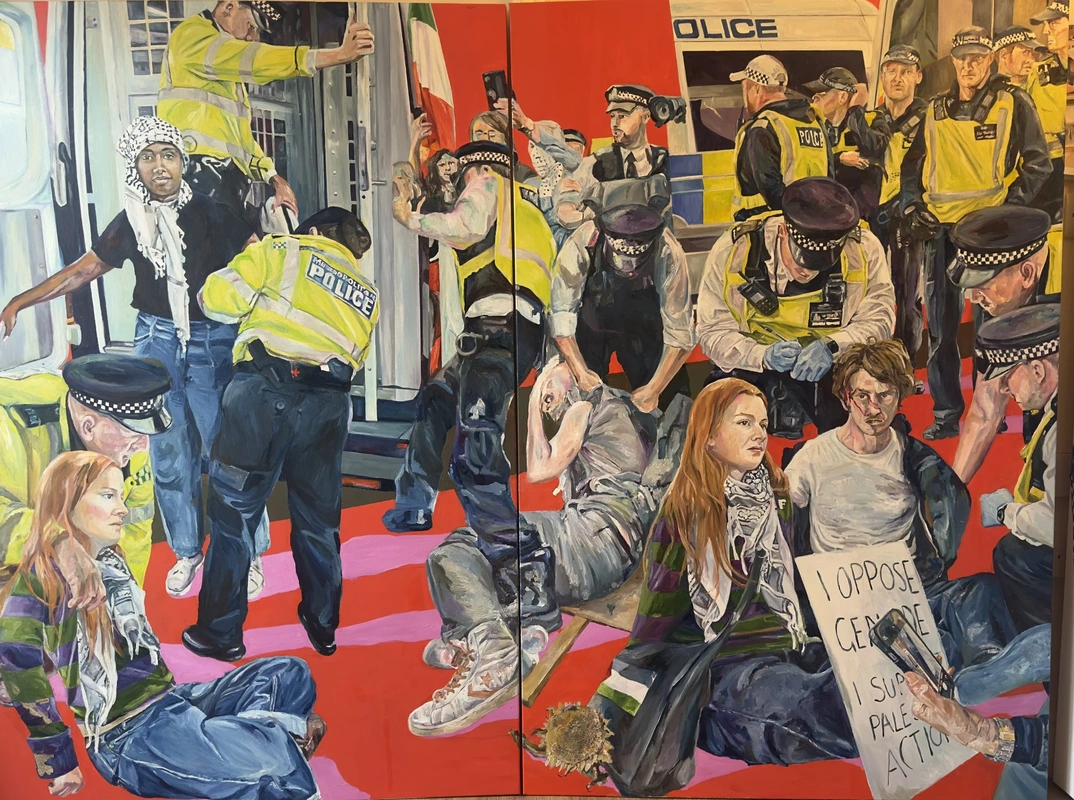
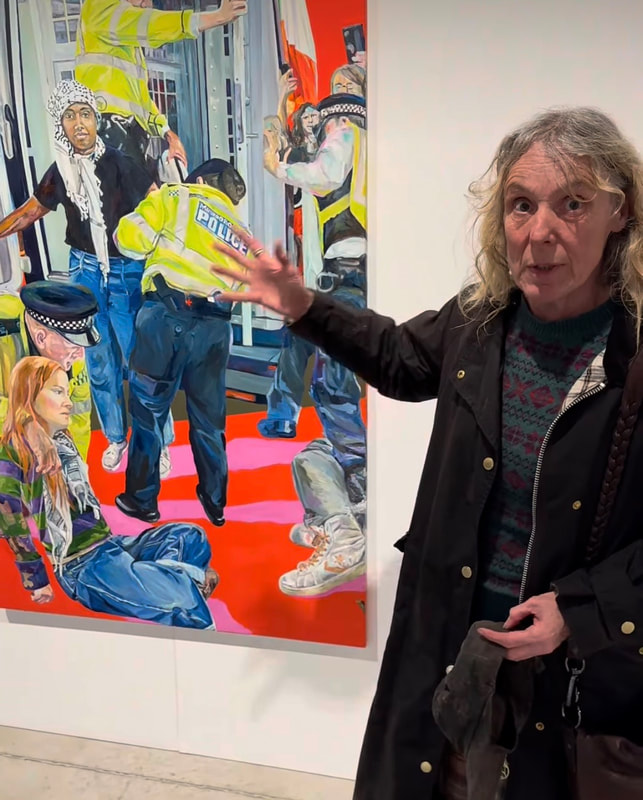
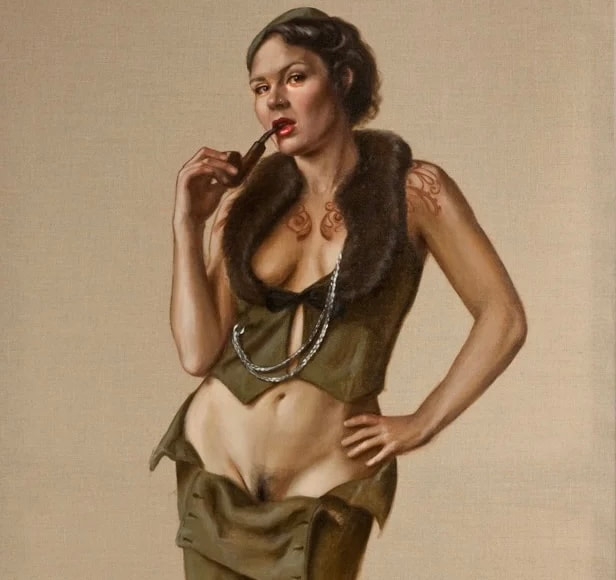
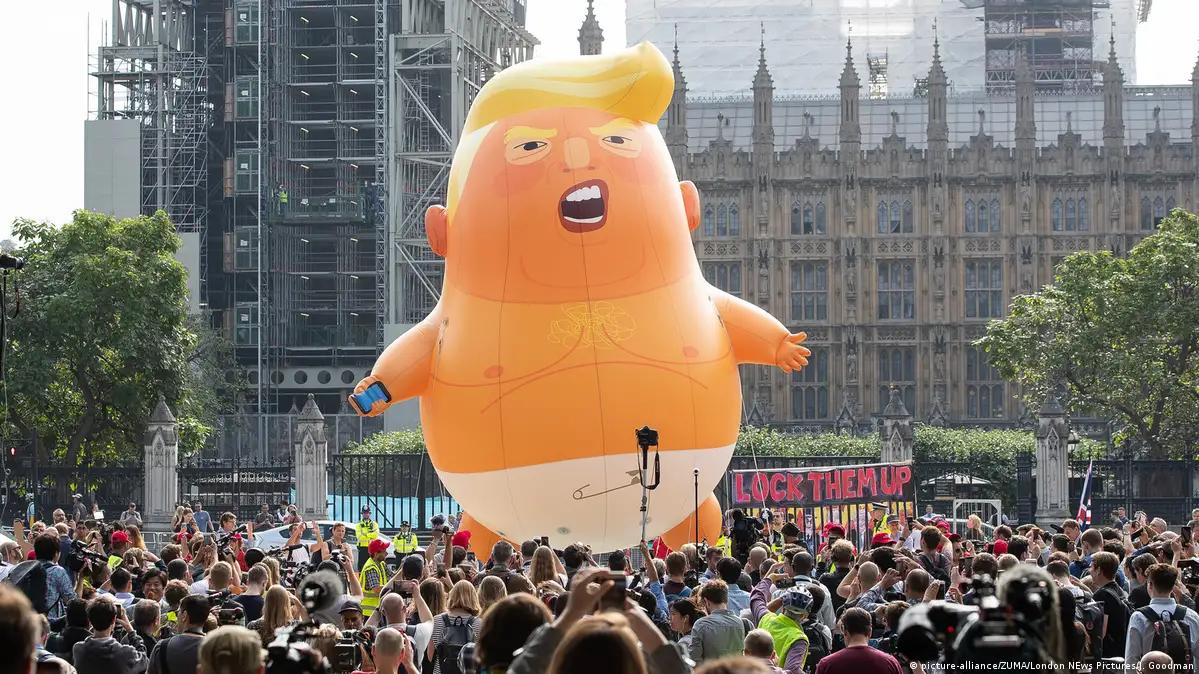
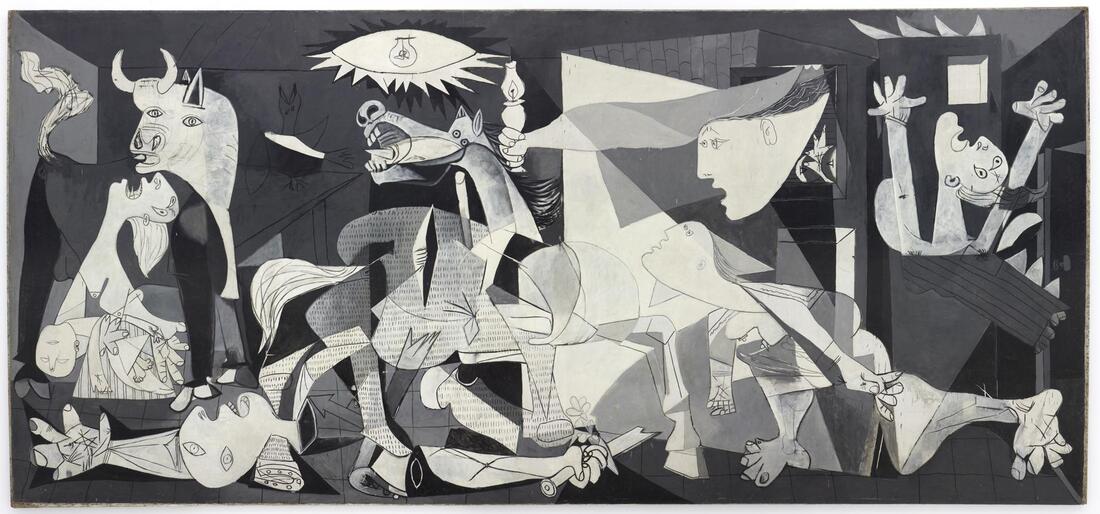
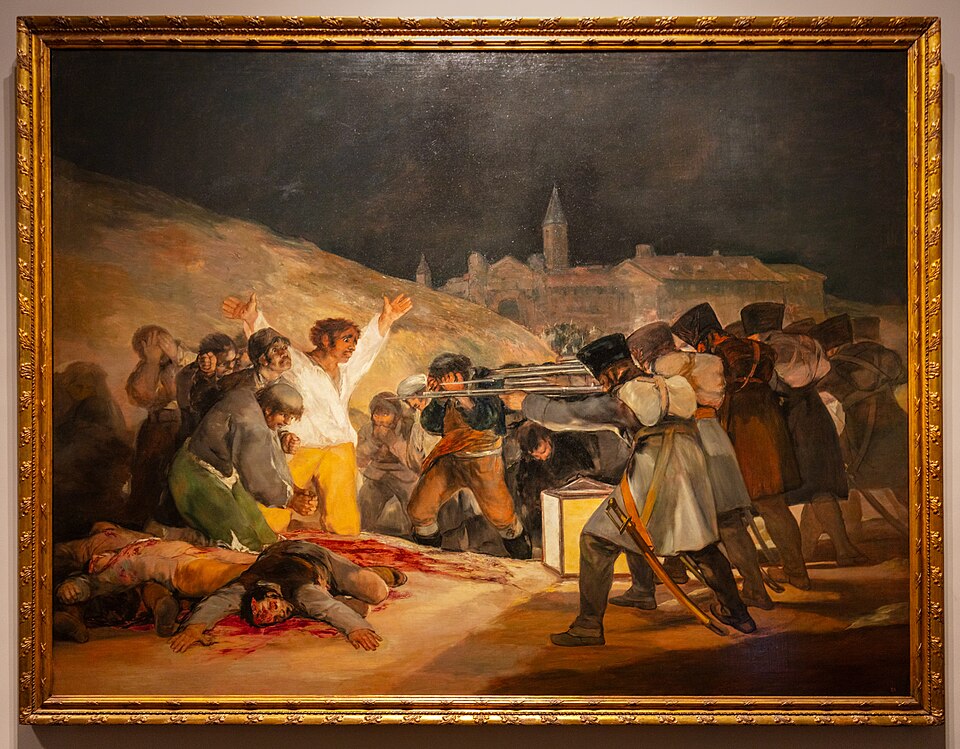
Where do we draw the line between artistic freedom and curatorial responsibility? Should galleries censor art? And if so, who decides what is acceptable and what isn't? It's a question I've been considering following a recent controversy involving fellow artist Christine Roychowdhury and her painting Protest. Christine's work is a diptych depicting contemporary political protest. It was exhibited in its entirety at the Society of Women Artists' (SWA) annual exhibition at Mall Galleries in June this year. Subsequently shortlisted for the Women in Art Prize, the painting was to be displayed at a gallery in Chelmsford. However, when the exhibition opened, only one panel was hung. The missing panel depicted a protester holding a placard that could be interpreted as supporting Palestine Action, an organisation proscribed under UK terrorism legislation. According to Christine, the gallery were concerned that the image might cause offence! The decision prompted protests from fellow artists. One suggested leaving the empty space where the missing panel should've been, turning the art of censorship into part of the exhibition itself, which is effectively what happened - for a few days, at least. I've always believed artists are chroniclers of their time. Think of Picasso's Guernica, Goya's The Third of May 1808, or Kathe Kollwitz's depictions of poverty, grief, and war. These artists weren't simply creating attractive images, they were responding to the world around them. This brings me to what I find so troubling about the decision to withhold part of Christine's painting. Surely depicting something is not the same as endorsing it... or is it? A photographer documenting a demonstration might capture protesters carrying controversial placards. A journalist might report on the same event. Why would a painter depicting that scene be treated differently? Of course, artists aren't necessarily impartial observers, and neither are photographers who choose what to include in the frame and what to leave out. We all interpret what we see. However, if certain events become too politically sensitive to depict, aren't we in danger of sanitising our history? Remember the enormous inflatable depicting President Donald Trump as a baby wearing a nappy, flown above protestors during his visit to London in 2018? Some saw it as legitimate political satire; others considered it deeply disrespectful, yet the inflatable was subsequently acquired by the Museum of London as an object of historical significance. Something that offended people at the time is now preserved as part of the history of political protest. I find that rather telling. Would we defend an artist's right to ridicule a political figure we admired? Perhaps that's where our commitment to artistic freedom is really tested. Of course, galleries have responsibilities. They must consider public safety, their visitors, and the law, but exhibiting a work doesn't necessarily mean endorsing its message. Surely there is a distinction between choosing not to exhibit a work and agreeing to display it, then withholding part of it. A diptych is conceived as a single artwork. Removing one panel can fundamentally alter its meaning. But there must be limits. What about art that actively incites violence, promotes hatred, recruits for violent extremists, or involves exploitation and abuse? Artistic freedom cannot be a blanket justification for genuine harm. Context is everything. A painting depicting a racist demonstration might be exposing prejudice rather than promoting it. Disturbing images of genocide might condemn atrocities rather than glorify them. What happens when the artist's intentions and the audience's interpretation differ? Who decides? There is a difference between something being offensive, genuinely harmful, and unlawful. We shouldn't confuse the three. The proscription of Palestine Action raises legitimate legal considerations, but depicting a controversial placard is not automatically equivalent to endorsing its message. I ask these questions as someone who has been on the other side of a curatorial decision. When Protest was exhibited at the SWA annual exhibition at Mall Galleries in June, it hung in the East Gallery, which I personally curated. In fact, we made Christine's painting the focal point of that particular wall, arranging the surrounding exhibits around it, not necessarily because of its political message but because it was big, bold, and full of action. It had a presence that naturally commanded attention. We were, of course, conscious that its subject matter might provoke a reaction. There was even some concern that someone might attempt to deface it. Nevertheless, we displayed both panels. The SWA has itself experienced censorship by a gallery when in 2014 we were asked by Mall Galleries to take down Portrait of Ms Ruby May, standing by the artist Leena McCall. This was despite the society itself selecting the piece for exhibition. Different subject matter but the same fundamental question: who ultimately decides what the public is allowed to see? There is a wonderful irony in all of this. Christine painted a work about protest, only for the decision to withhold one of its panels to provoke a protest of its own. The protest became the protest! Eventually the missing panel was hung, and the controversy generated considerable publicity for the painting, something the gallery itself acknowledged. What fascinates me is how the painting's subject matter spilled beyond the canvas into real life. The debate surrounding its display became part of its story. There is something rather poetic about that. So where do we draw the line? I don't believe every artwork must be exhibited, nor that artists should be immune from criticism. Curators have legitimate responsibilities, and there are legal and ethical boundaries. Art isn't always about producing something beautiful to hang above the sofa. Sometimes it confronts us with uncomfortable truths, challenges our beliefs, or simply makes us angry. That's fine. What does concern me is the possibility that, in trying to avoid offence, we begin deciding which aspects of contemporary life artists are permitted to record. Perhaps the question galleries should ask isn't simply whether the work might offend, but whether there is a compelling reason it cannot be shown, and whether explanation or discussion might be preferable to removing it. In Christine's case, I feel it would have been better to let the public see the painting in its entirely and make up their own minds. Thankfully this is exactly what the gallery did in the end. If we defend artistic freedom only when we agree with the artist, are we defending artistic freedom at all? I'd be interested to know your thoughts. As always, please share your views in the comments box below.
8 Comments
Lorraine Sweeney
2/11/2026 08:57:18 pm
I don’t agree with censoring art simply because it might offend. Art should challenge us, make us uncomfortable and provoke discussion. 4/11/2026 10:48:28 pm
Thank you, Lorraine. The photograph you mention is a powerful example of why difficult and distressing images matter. Your distinction between protecting people from genuine harm and shielding them from uncomfortable ideas is particularly important. Context can help us understand a work without diminishing its impact, and surely allowing people to form their own judgements is central to artistic freedom. The challenge, of course, is deciding where genuine harm begins and offence ends. 4/11/2026 05:12:53 pm
I agree with what you have written and would only add that sometimes in prewar Germany etc and it was difficult for artists to speak out. I as the artist am not niave enough to think that it is not dangerous to make a stand and to add my voice to that of others and point out the danger of losing the right to protest. Many people have gained by the corrective measure of the power of protest but equally many people have placed themselves in danger for it . 4/11/2026 10:33:59 pm
Thank you, Christine. You raise an important point about the personal risks artists sometimes take when challenging authority. What interests me is that you were fully aware of the implications of making your statement and chose to make it nonetheless. Yet the gallery made a different assessment of those risks. It raises an interesting question: when an artist is prepared to stand by their work, whose assessment of the risks should ultimately prevail? 4/11/2026 09:46:07 pm
Thanks for including 'Ms Ruby May, standing' in this, Anne. I painted her as part of a body of work about how a woman chooses to express her own eroticism, for herself rather than for a male viewer. Ruby picked her own clothes and brought her father’s pipe. The Society of Women Artists selected the painting and hung it. The, then gallery director, a man, decided it was too pornographic and disgusting to stay. So a painting made outside the male gaze ended up judged by it. A different nude went up in its place, so it was never about nudity. I get that a venue has to think about who walks through the door, but the society had already done that thinking. It still amazes me that a woman looking straight back at you could provoke that strong a reaction. I’d like to think Ruby would stay on the wall today, but perhaps society still isn't ready for a powerful woman in charge of her erotic identity. 4/11/2026 10:56:22 pm
Thank you, Leena. Your insight into the thinking behind the painting adds another dimension to the discussion, particularly your observation about the male gaze. I find it interesting, too, that the decision was made before the public had an opportunity to form its own opinion. Has Ruby’s portrait been exhibited elsewhere since, and if so, have you encountered similar reactions? I’d be interested to know. Thanks once again
Leena McCall
5/11/2026 11:36:32 am
Its interesting Anne, because when she was on show briefly at a pop-up show in Hampton Court, some people complained about her to the gallery owner. So, clearly, it wasn't just at the Mall Galleries. She is now part of the permanent censored art collection in Barcelona, although I don't know when this collection will next be on show. But she's in good company. 5/11/2026 01:20:38 pm
That’s fascinating, Leena. So Ruby has continued to provoke reactions and now finds herself in a collection devoted to censored art! There’s a certain irony in that, but at least people get to see her in that context! I do wonder whether the censorship label influences how people respond to the painting. Perhaps some art should come with a health warning rather than a censorship label\! 😂 Leave a Reply. |
AuthorI love to paint and sketch and although predominantly a studio artist, I have discovered the joys of painting and sketching outdoors. Archives
September 2026
Categories |
 RSS Feed